Drift to the rhythm of the paddle past limestone cliffs, mangroves and riverside villages: from the Tsiribihina to the Pangalanes, a pirogue offers an unhurried, close-up view of life along the water.
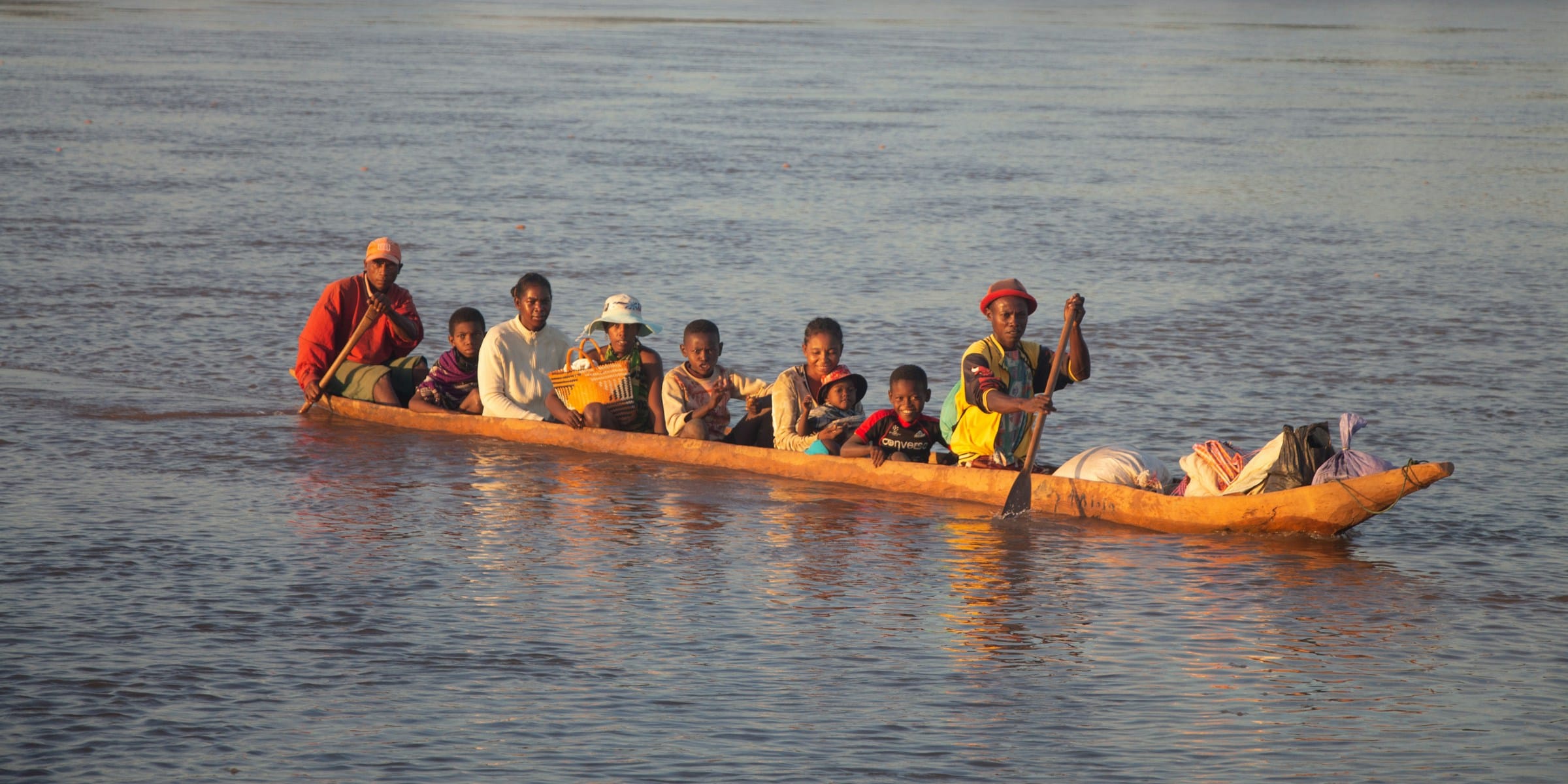
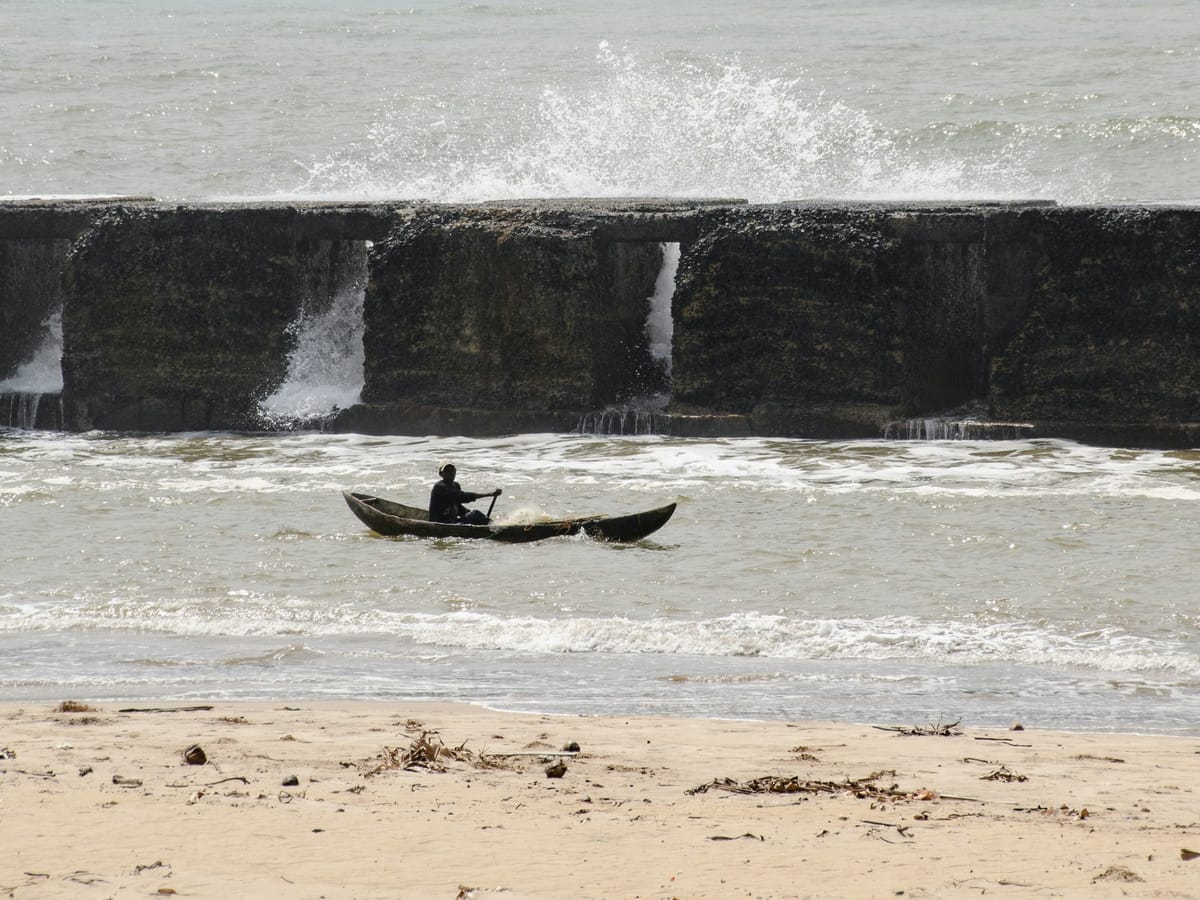
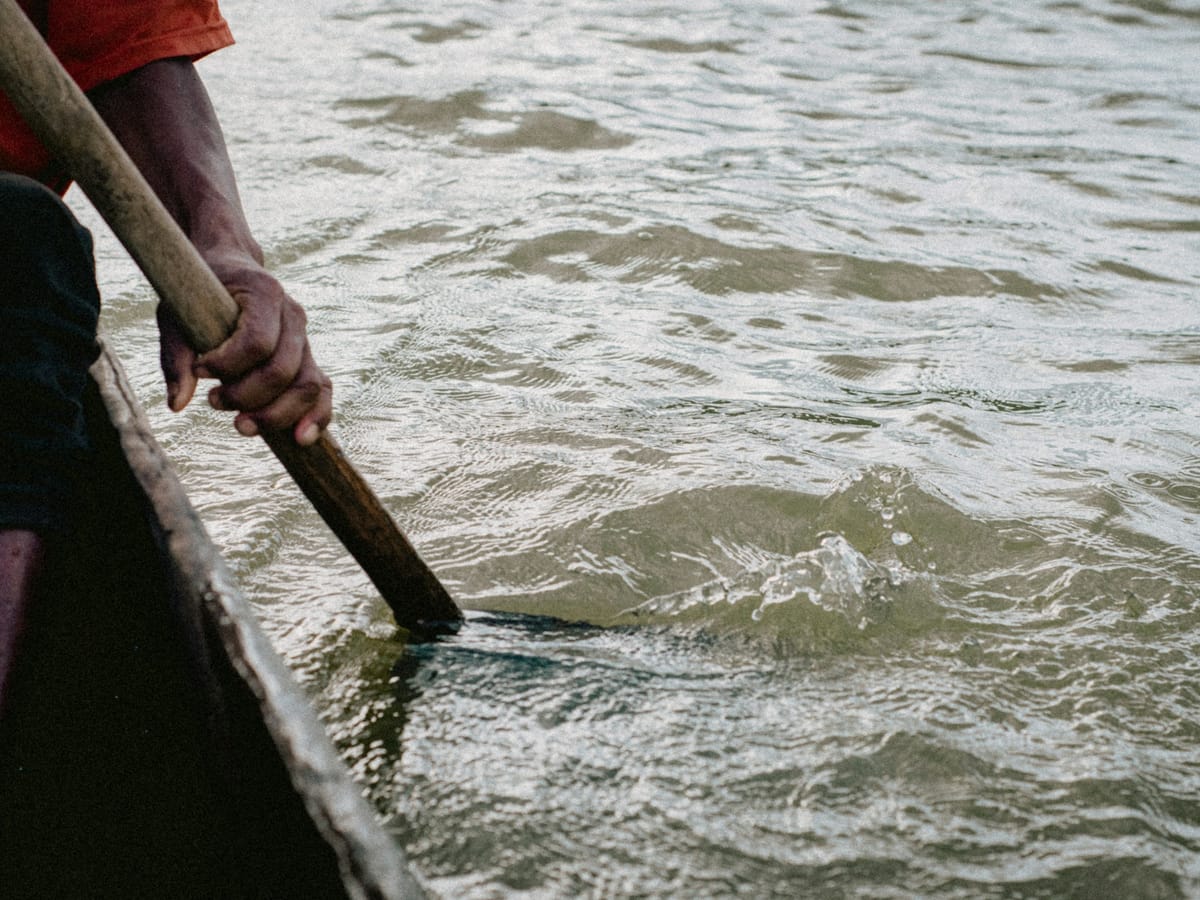
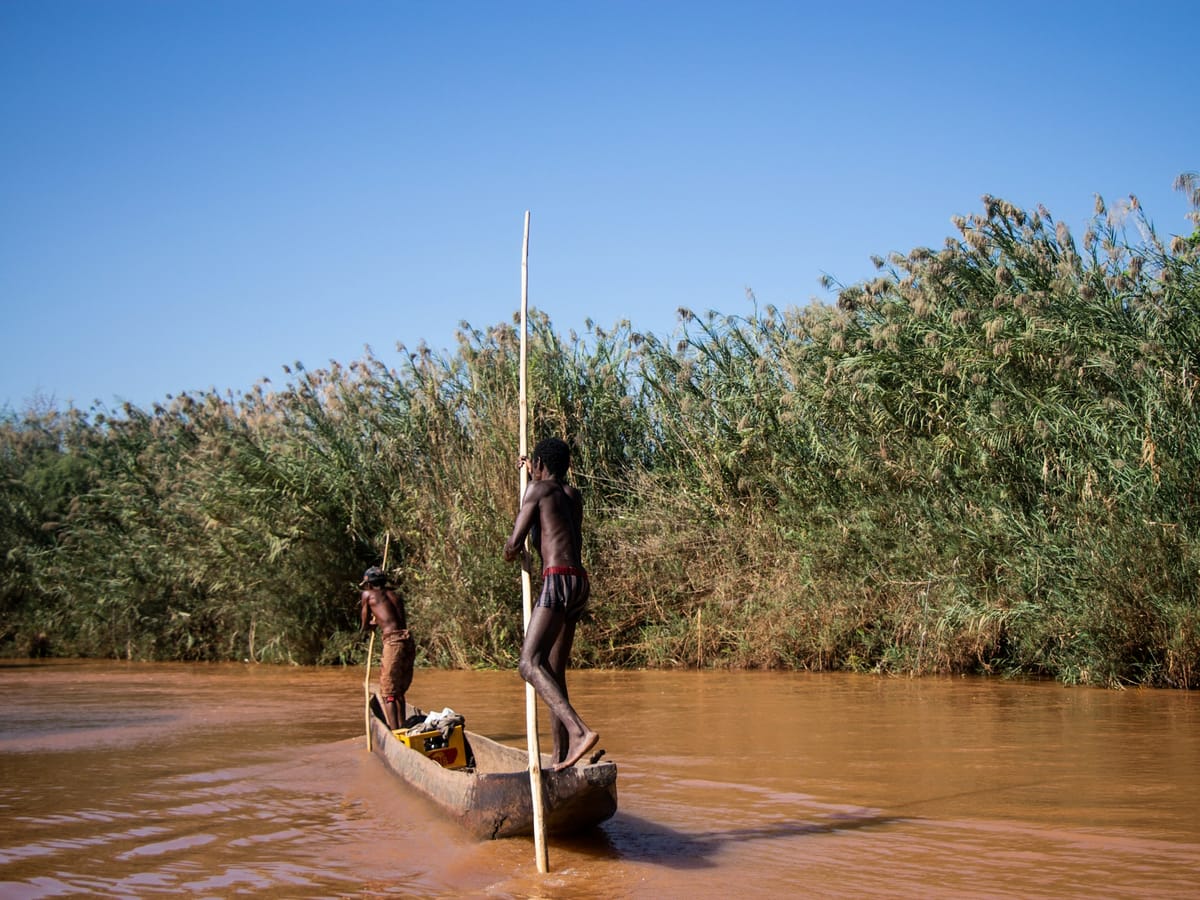
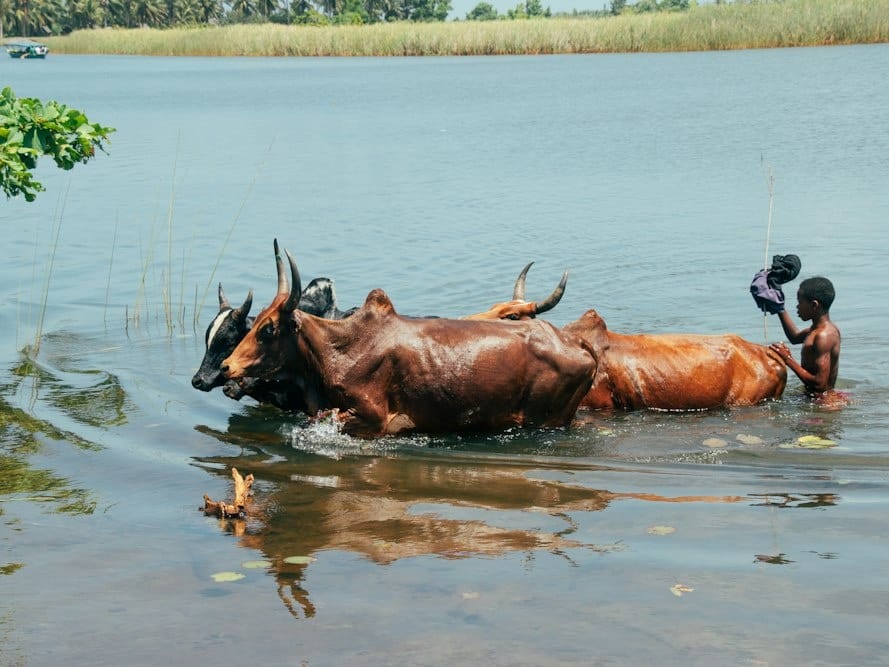
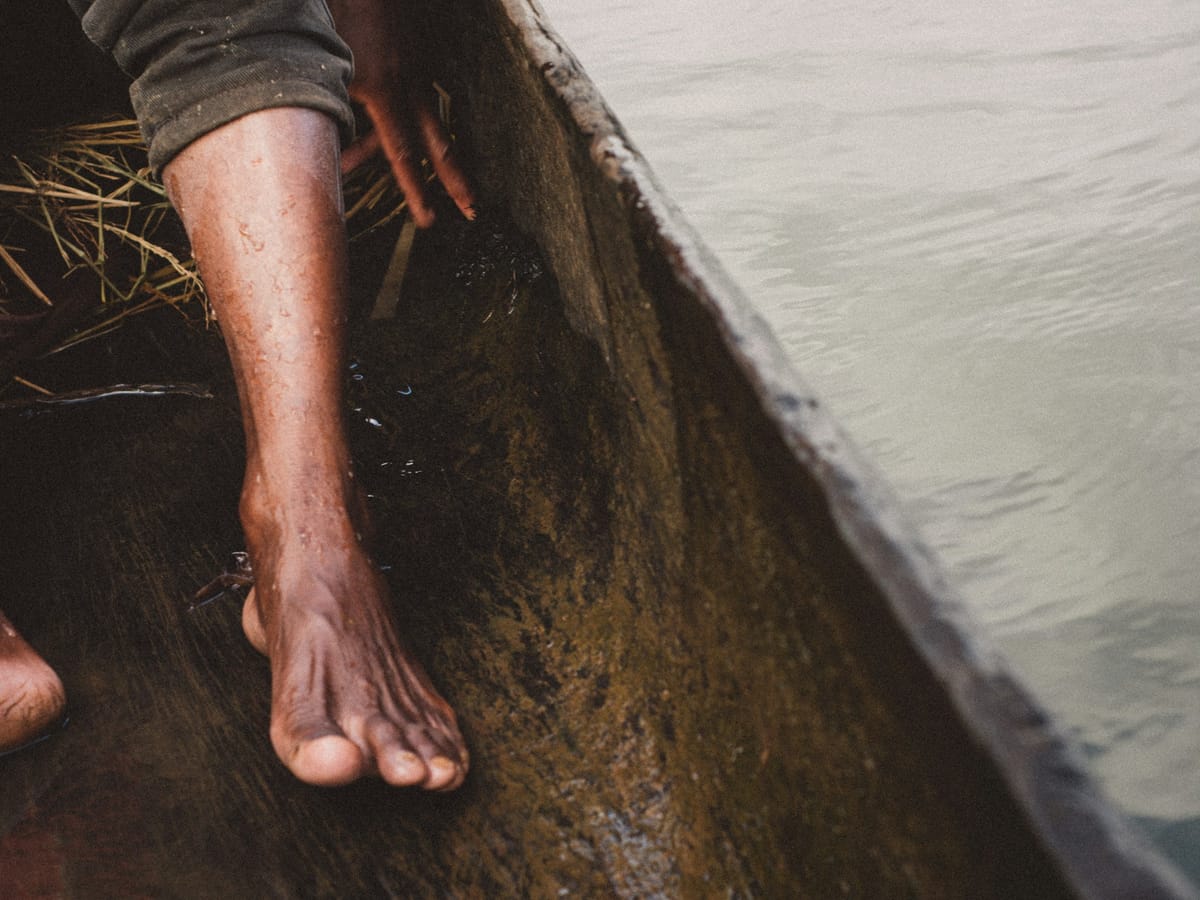
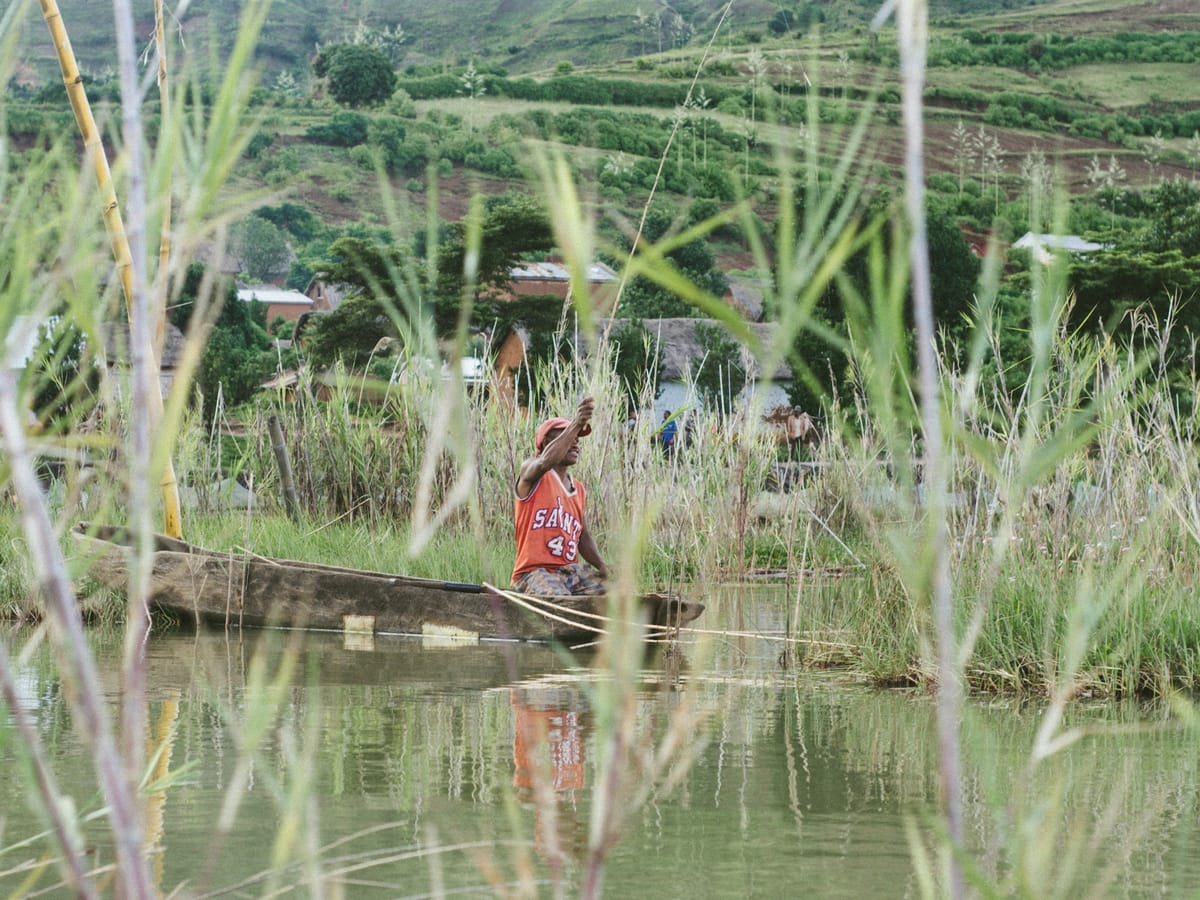
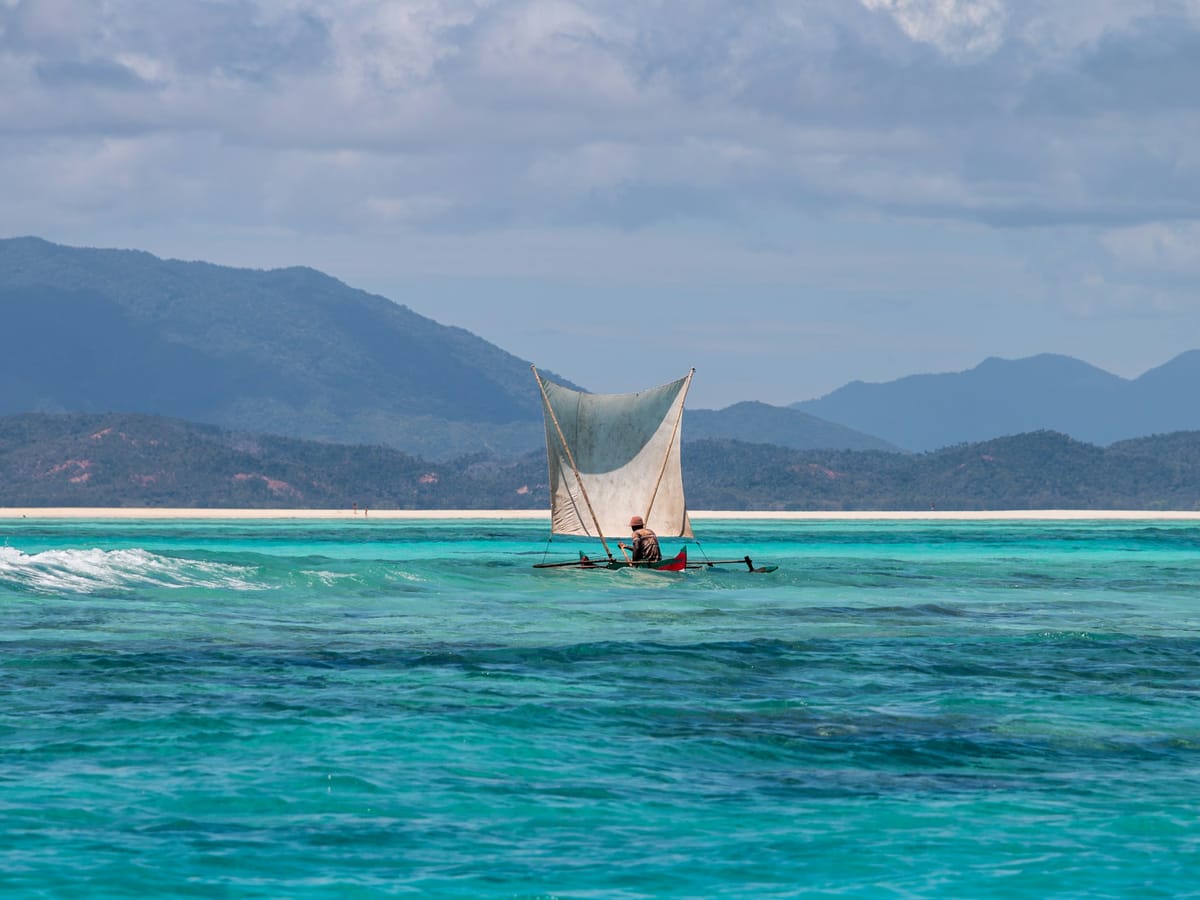
Carved from a single tree trunk, the dugout pirogue is still how riverside villages get around. Sitting just above the water, you leave it to the boatman, who paddles or poles you along: no experience is needed. Trips last a few hours, as in the Manambolo gorges or on the Morira River, or a whole day.
The Tsiribihina descent is a real expedition: three days on the river, with swims, stops in villages and nights under canvas on the sandbanks, while the crew takes care of the camp and meals. Depending on the water level and your preferences, you travel by silent traditional pirogue or by faster motorised barge.
100% tailor-made
On the spot
Things to do and see
The highlights of the activity, arranged around your pace and your wishes.
Travel down the Tsiribihina
Usually three days on the river, from Miandrivazo towards Belo-sur-Tsiribihina, through gorges, savannah and villages, with two nights under canvas on the sandbanks.
Explore the Manambolo gorges
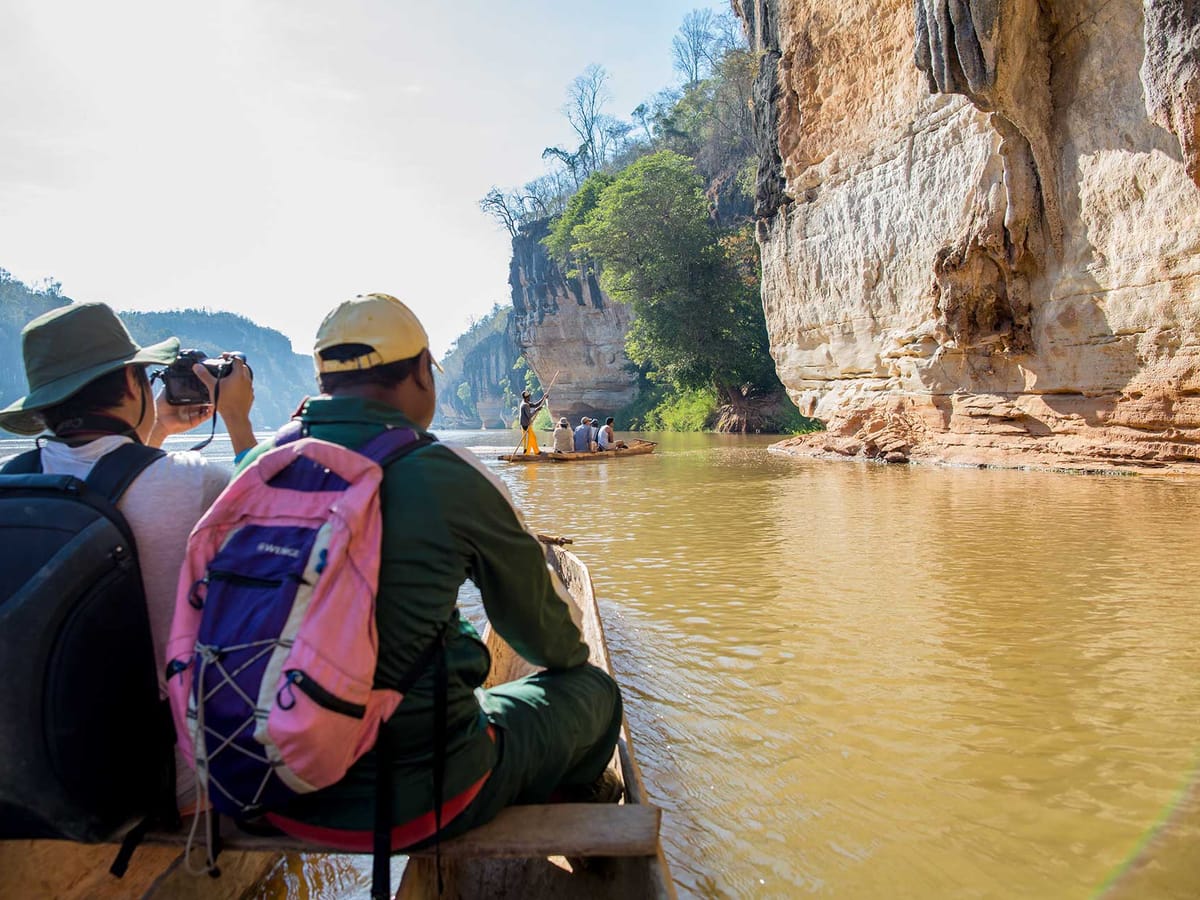
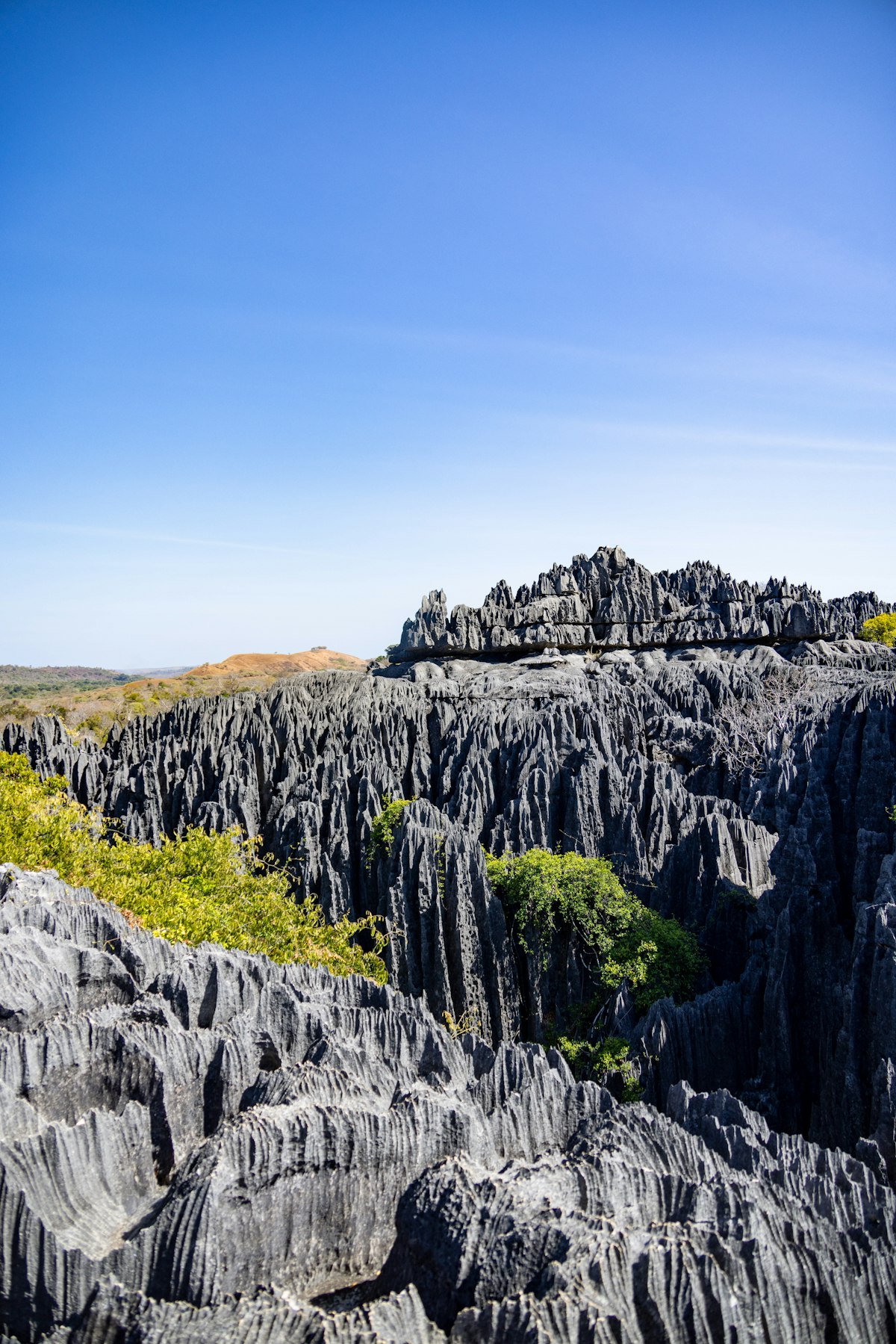
At the foot of the tsingy, the pirogue glides between towering limestone cliffs to caves hung with stalactites, which your guide shows you around.
Look out for lemurs and crocodiles
Along the banks of the Tsiribihina, you may spot lemurs in the trees, herons, cormorants and, with a little luck, crocodiles basking on the sandbanks.
Cross the Morira mangroves
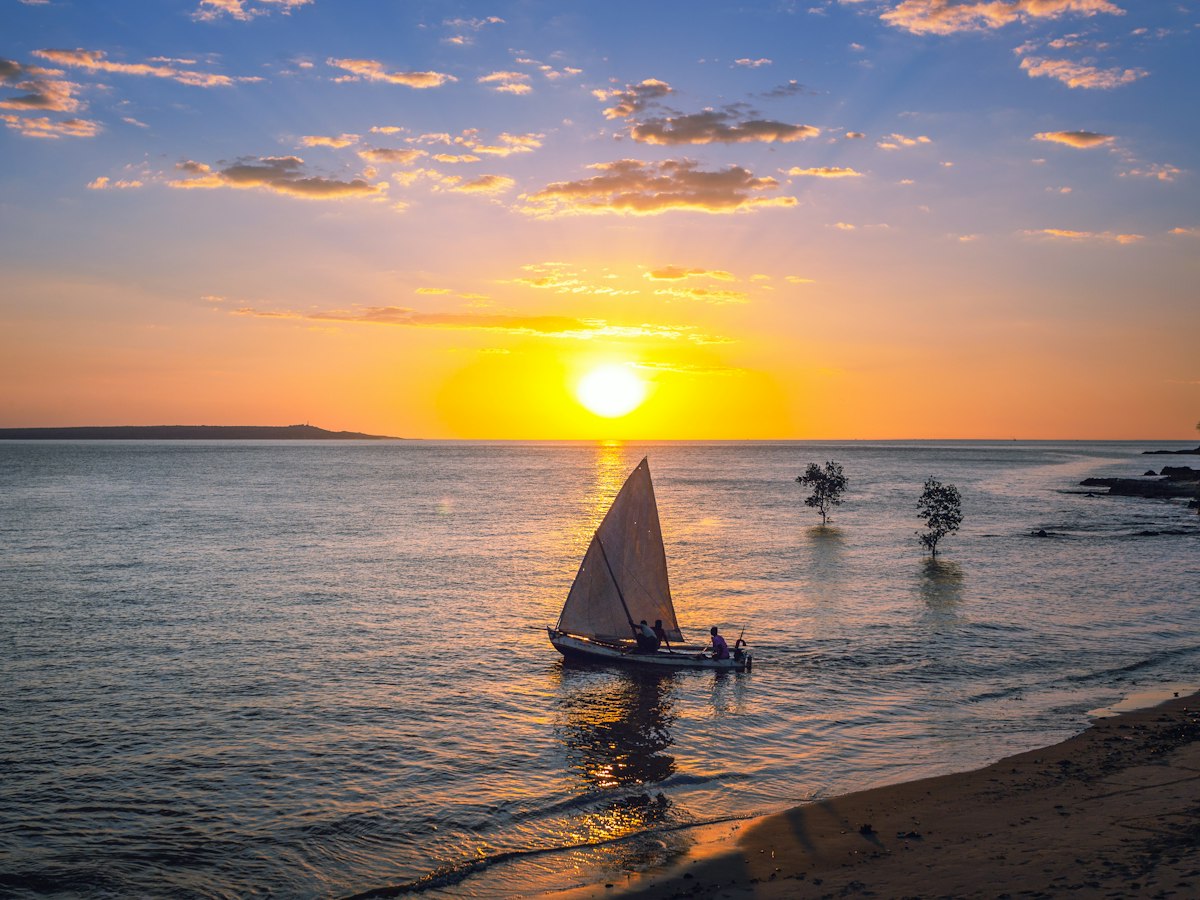
When the tide allows, the pirogue heads upriver through the mangroves to the village of Ankabokabe and its rice, banana and cassava fields, or to the village of Ladigy.
Picnic on the Bemarivo
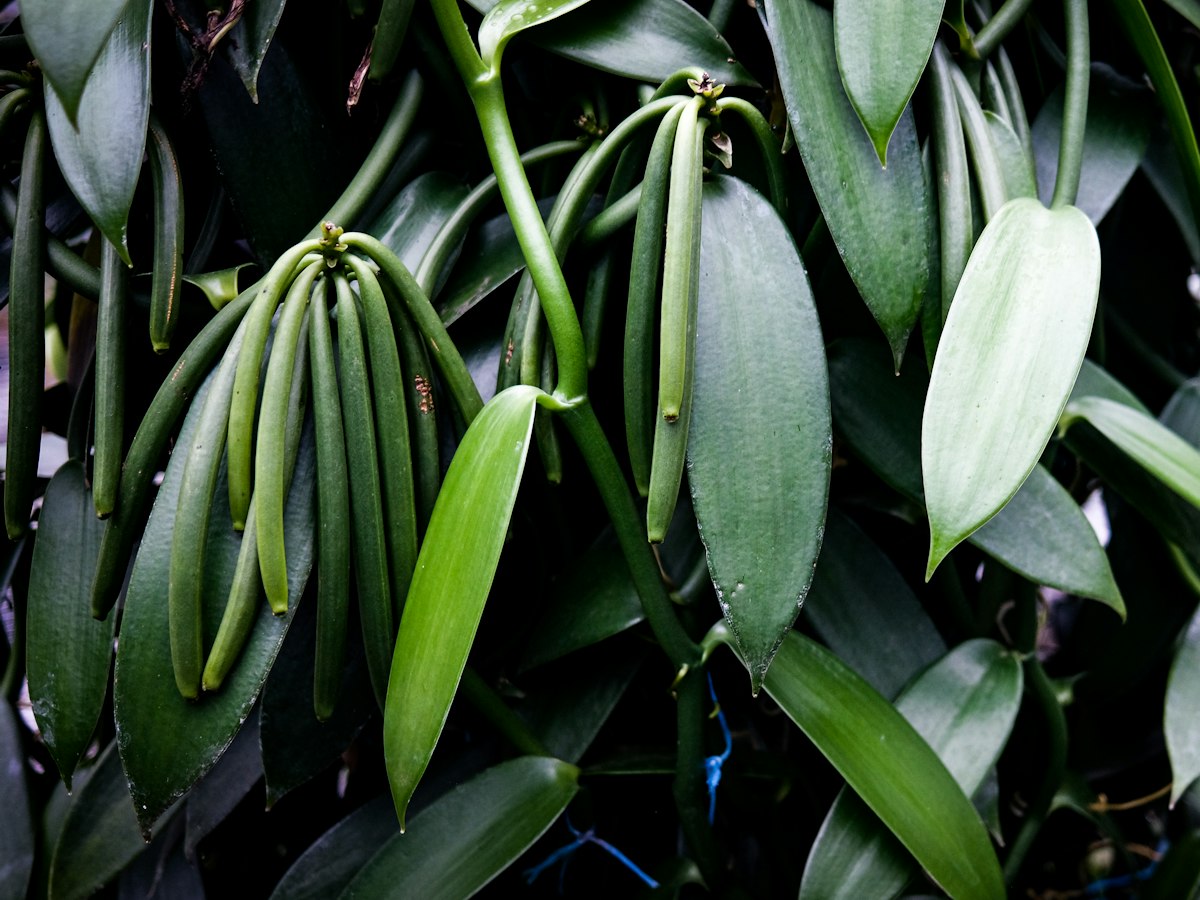
Near Sambava, in vanilla country, a peaceful pirogue trip comes with a picnic lunch served on board, surrounded by lush greenery.
Swim beneath a waterfall
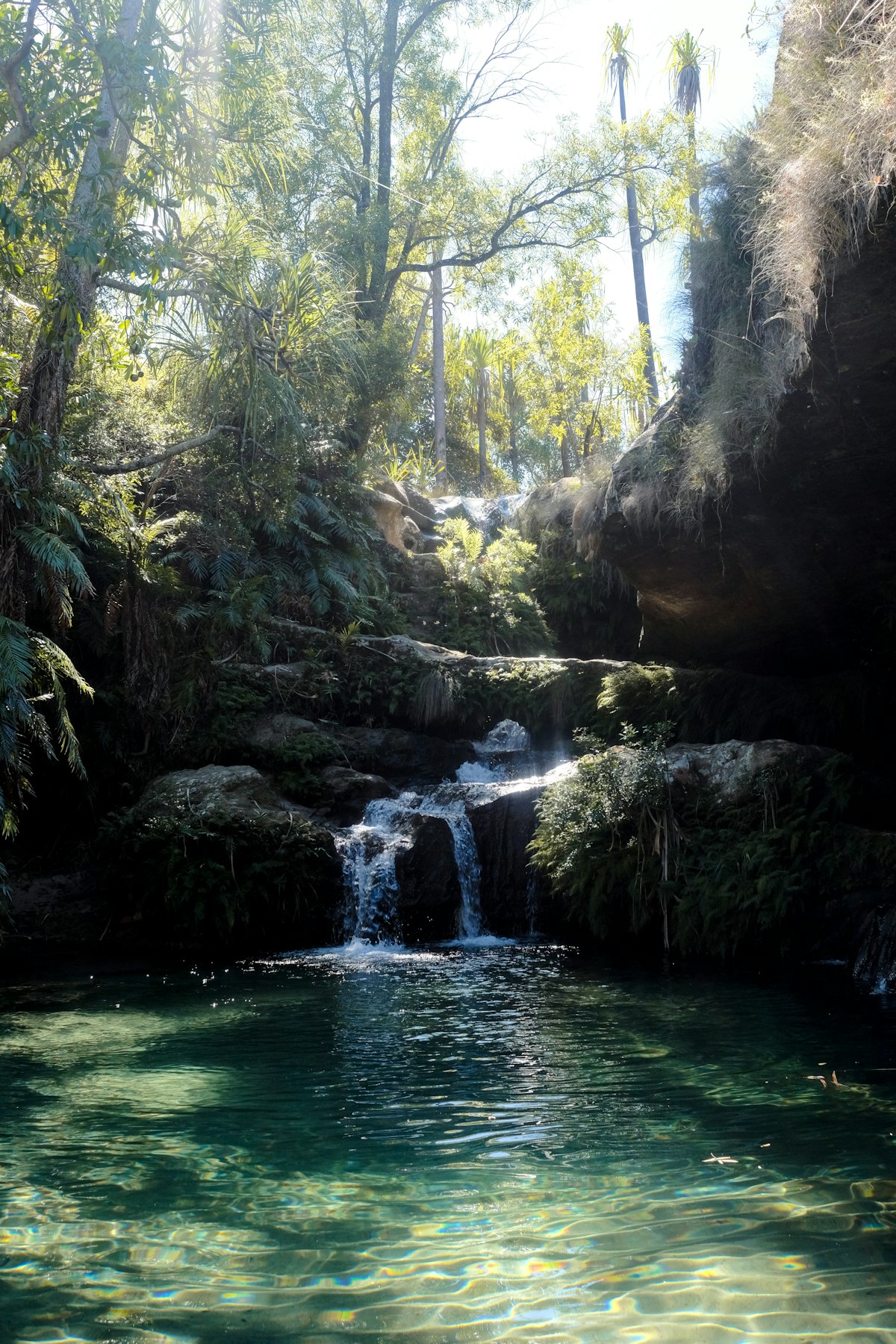
During the Tsiribihina descent, stop for a refreshing dip at the Anosinampela waterfall and its turquoise natural pool.
Destinations
Where to go
Our favourite places for this activity, to link together or to slot into one of our tours.
West, from Miandrivazo to Belo
Tsiribihina River
A classic of western Madagascar, the trip usually takes three days and two nights, from Miandrivazo or Masekampy, depending on the water level, down to the Belo-sur-Tsiribihina area. You drift between gorges and savannah, swim at the Anosinampela waterfall, look out for lemurs and crocodiles, and sleep under canvas on the sandbanks.
West, at Bekopaka (Bemaraha)
Manambolo Gorges
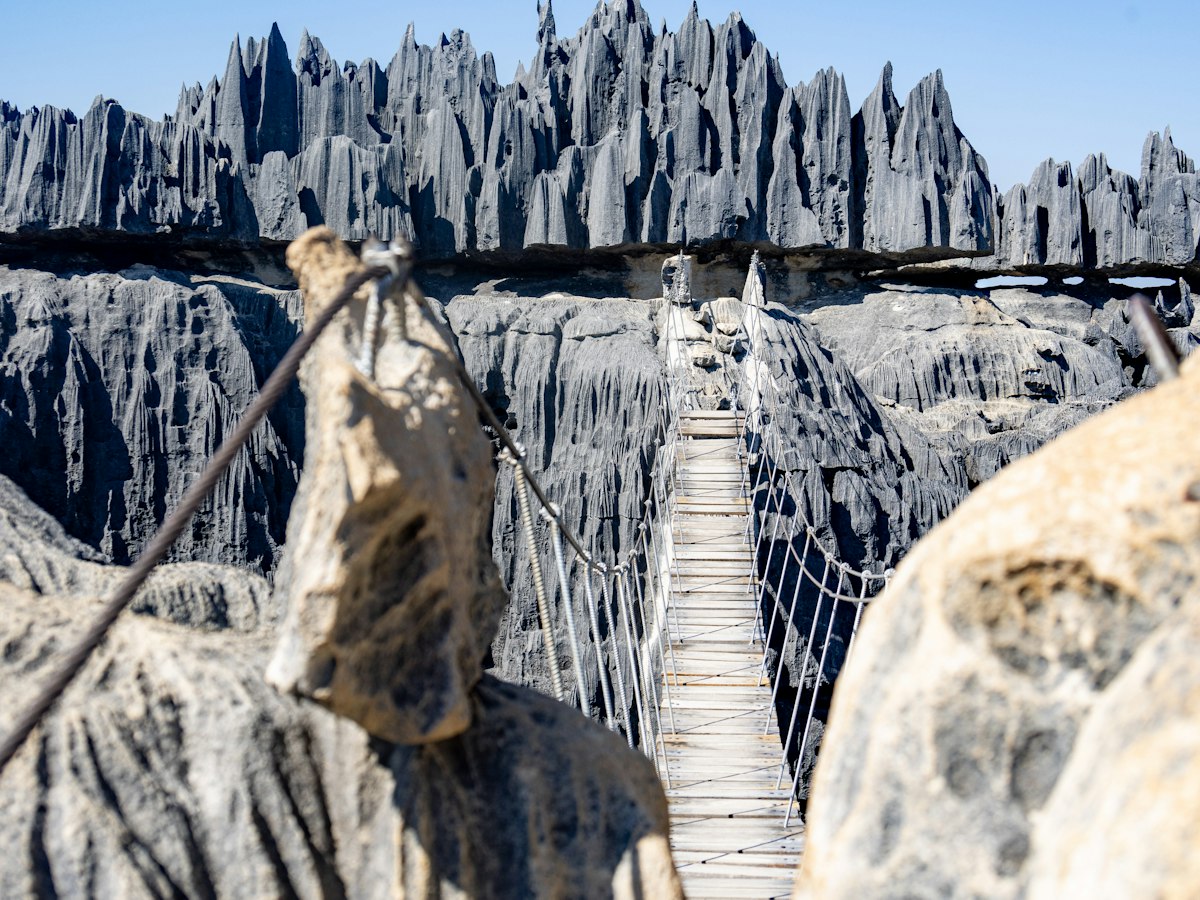
At the foot of the Tsingy de Bemaraha, a trip of about an hour and a half takes you through the Manambolo gorges, between limestone cliffs up to 80 metres high. Your guide stops at the caves, hung with stalactites, and tells the story of the Vazimba, legendary ancestors said to have lived in them. A stop on our Tsingy Adventure, Immersive Journey and Luxury Travel tours.
East coast, Toamasina to Farafangana
Pangalanes Canal
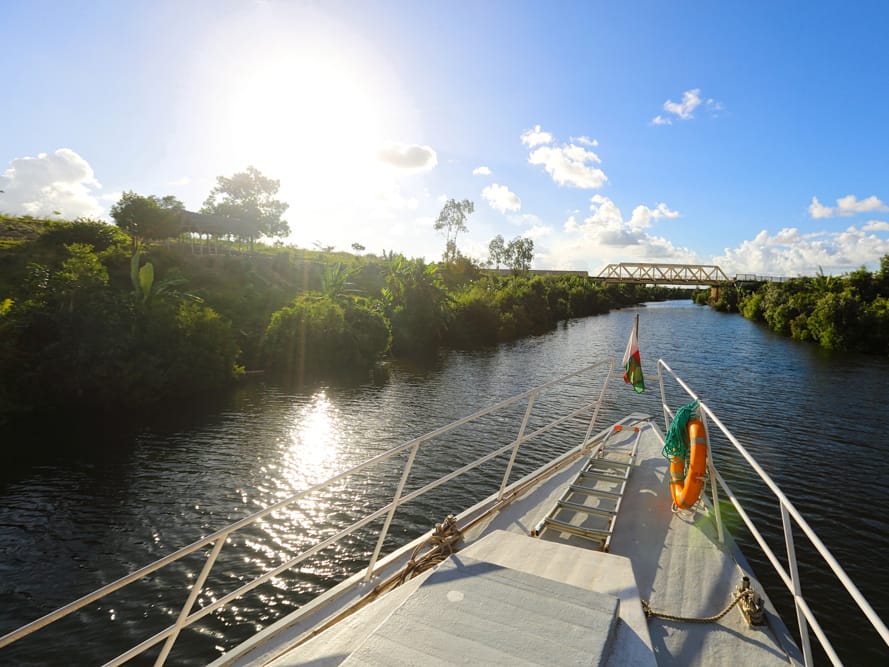
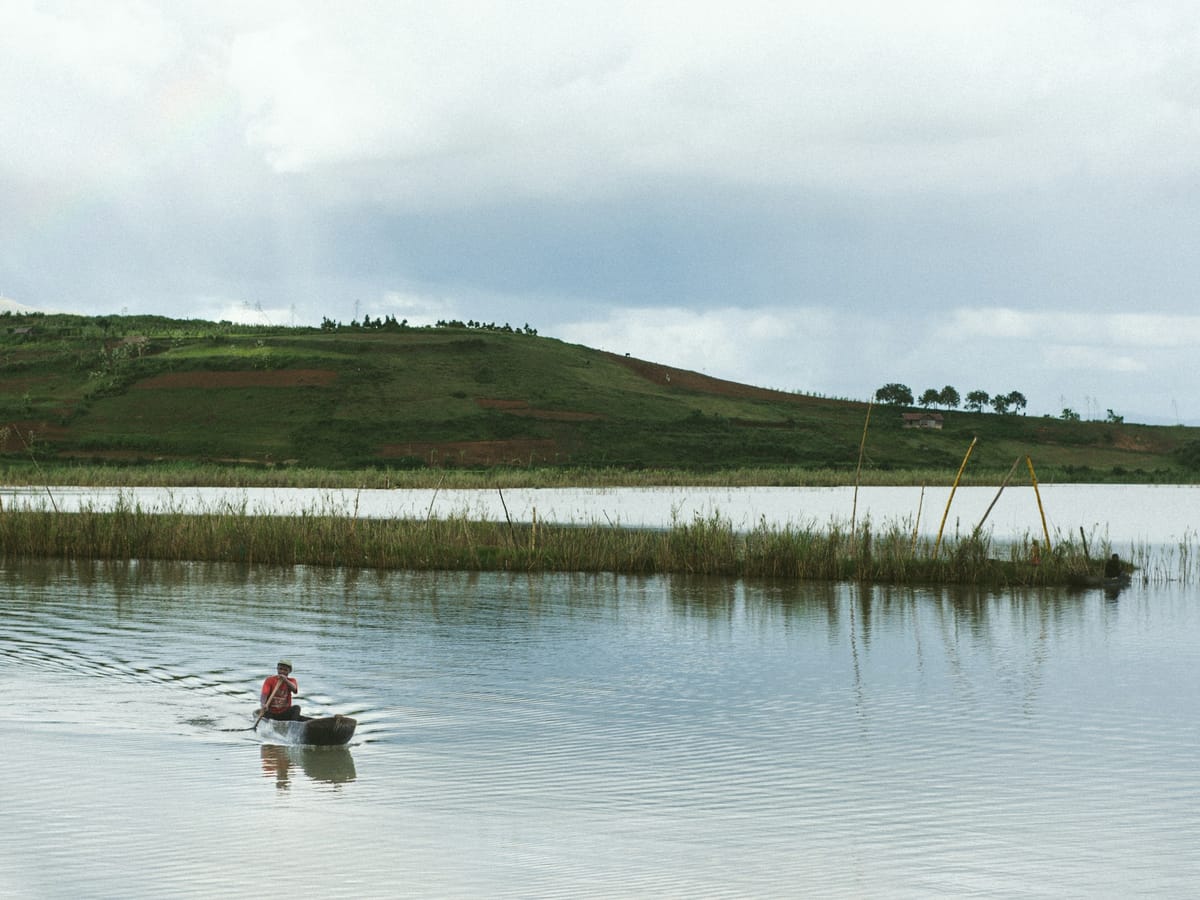
Some 650 kilometres long, this chain of lagoons, lakes and canals runs alongside the Indian Ocean, criss-crossed by fishermen’s canoes. From the Manambato landing, our eastern tour travels by boat between villages and river mouths, with a chance to swim and a visit to the Palmarium reserve, where lemurs roam free.
North-west, Mahajanga area
Morira River
Setting out from Antsanitia, you travel up the Morira River by pirogue through the mangroves, at a time set by the tide. There is a stop at Ankabokabe, a village of about 80 people, to see its rice, banana and cassava crops, or at the riverside village of Ladigy. A day on our Zen and Back to the Roots tour.
In pictures
The activity in photos
A few images of the activity and of the places where you can enjoy it.
The right time
When to go
The dry season, from May to October, is the best time: clear skies, tracks passable all the way to the landings and calm rivers. April and November are still possible, depending on the rains. From December to March, the rainy season swells the rivers and often cuts off the western tracks, making multi-day descents difficult or even impossible.
Late in the dry season, lower water may mean starting further downstream.
On the Morira, departure times depend on the tide.
Month by month
Jannot advised
Febnot advised
Marnot advised
Aprpossible
Mayideal
Junideal
Julideal
Augideal
Sepideal
Octideal
Novpossible
Decnot advised
Ideal
Possible
Not advised
This month
Recommended season: Best from May to October
In your bag
Gear and equipment
What is provided and what you should bring to make the most of the activity.
Provided
Pirogue and experienced boatman
Local guide
Life jackets
Tents and camping gear for the descent
Meals cooked by the crew during the descent
What to bring
Hat, sunglasses and sunscreen
Insect repellent
Dry bag for your camera and documents
Light long-sleeved clothing
Sandals that stay on your feet
Head torch for the camp
Sleeping-bag liner or light sleeping bag
Swimwear for the swims
Peace of mind
Safety advice
A few simple rules so you can enjoy the activity with peace of mind. On site, always follow your guide’s instructions: they know the ground and the conditions of the day.
Wear a life jacket, especially with children or if you are not a strong swimmer, and stay seated while under way.
Only swim where your guide says it is safe: crocodiles live in some western rivers, including the Tsiribihina.
Protect yourself from the sun, which is fierce on the water, and drink bottled or treated water regularly.
Apply insect repellent at dusk and ask your doctor about malaria prevention before you travel.
Keep cameras and documents in a dry bag tied to the pirogue, as a capsize is always possible.
Respect the fady, the local taboos, near tombs and sacred places by following your guide’s advice.
Take out insurance that covers repatriation, as the western rivers are a long way from the nearest hospital.
With BEMIRAY
Why choose this activity?
Boatmen who know the river
We work with boatmen and local guides who know every sandbank, every village and the customs to respect along the water.
One seamless journey
The descent fits into your tailor-made tour: a private vehicle with driver-guide takes you to the landing and meets you at the end to continue to the tsingy or Morondava.
At the pace of village life
Stops in riverside villages, markets and encounters with fishermen: we favour respectful travel that benefits the communities you pass through.
Good to know
Your questions
Another question? Our team replies within 48 hours, in English or in French.
No: the boatman paddles or poles, and you simply enjoy the scenery. If you would like to try, you can often take the paddle on a calm stretch, under his watchful eye.
Is the descent suitable for children?
Trips of a few hours suit everyone, with a properly sized life jacket. The three-day descent with camping is better suited to children used to the outdoors and the heat; let’s talk it through to choose the right option.
Where do you sleep on the Tsiribihina descent?
In tents on the sandbanks, at a camp set up by the crew. Comfort is basic, with no electricity or shower, but the swims along the way and the starry sky soon make up for it.
Can I combine a pirogue trip with a tour?
Yes: the Manambolo features on our Tsingy de Bemaraha tours, the Morira on the Zen tour, the Bemarivo on the vanilla tour and the Pangalanes in the east. The Tsiribihina descent can lead straight into a visit to the tsingy.
What is the difference between a pirogue and a barge?
The silent traditional pirogue is ideal for watching wildlife and getting to know the boatmen. The barge, a flat-bottomed motorboat, is faster and roomier, but also noisier.
Should I leave a tip?
It is not compulsory, but boatmen and crew appreciate it, especially after a descent of several days. Your guide will gladly advise you on local customs.
Combine it
Our tours with this activity
Find this activity on these itineraries, or add it to the tour of your choice: every trip is tailored to your wishes.