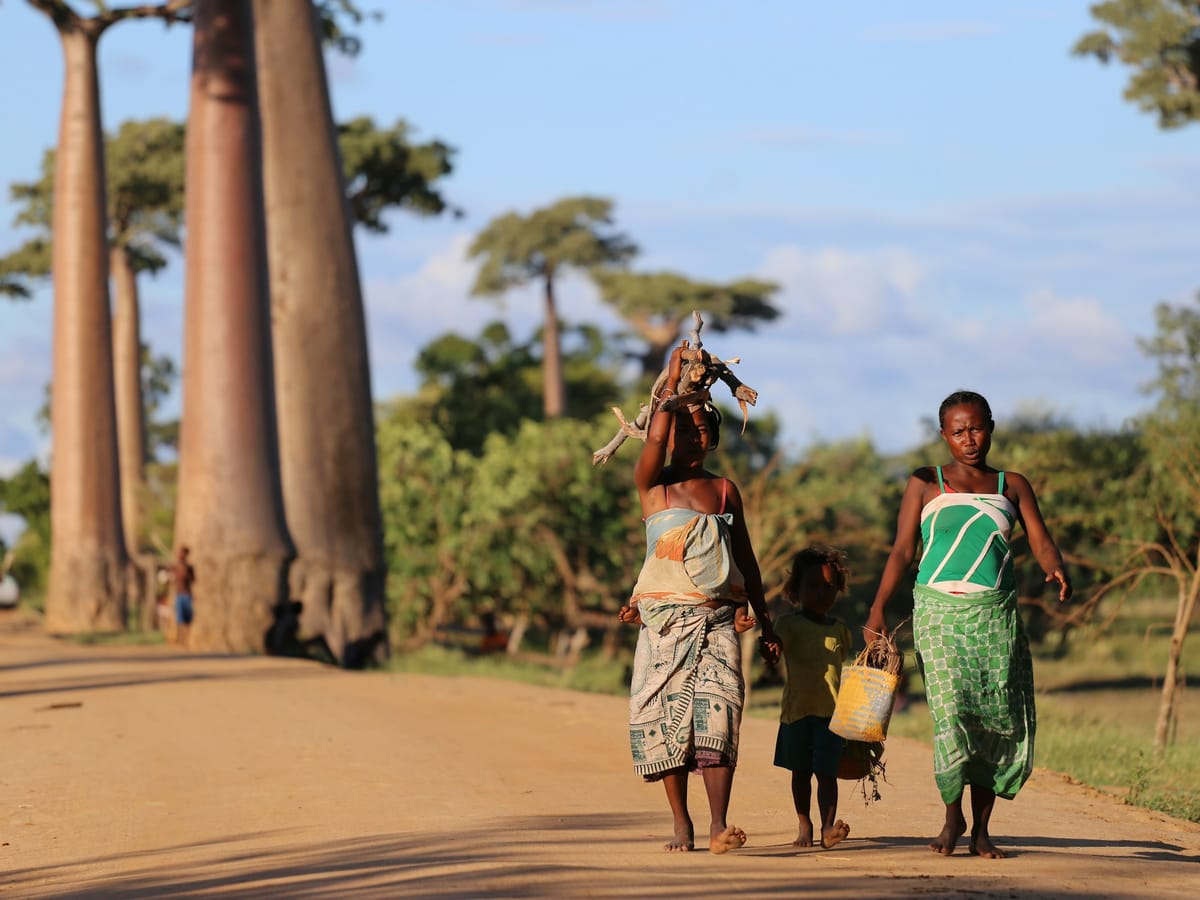
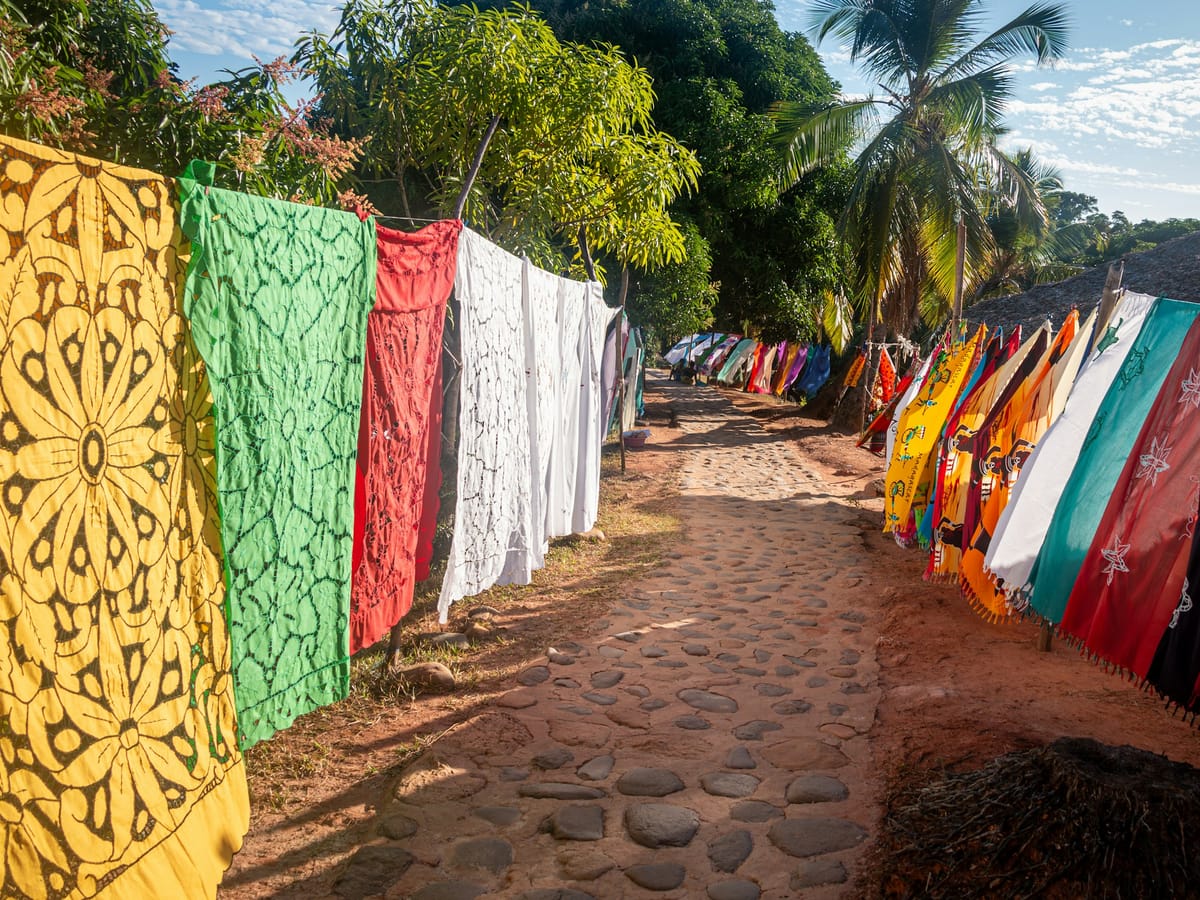
Zafimaniry woodcarving workshops, Antemoro paper, village markets and days spent in Sakalava country: encounters arranged with our local guides, at the pace of village life and with respect for local customs.
This is not a show but time shared with the people who keep Malagasy crafts alive: woodcarvers in Ambositra, papermakers in Ambalavao, embroiderers and miniature makers in Antsirabe, blacksmiths and basket weavers in the villages around Betafo. Your local guide makes the introductions, translates and explains the techniques, the materials and the meaning behind the patterns.
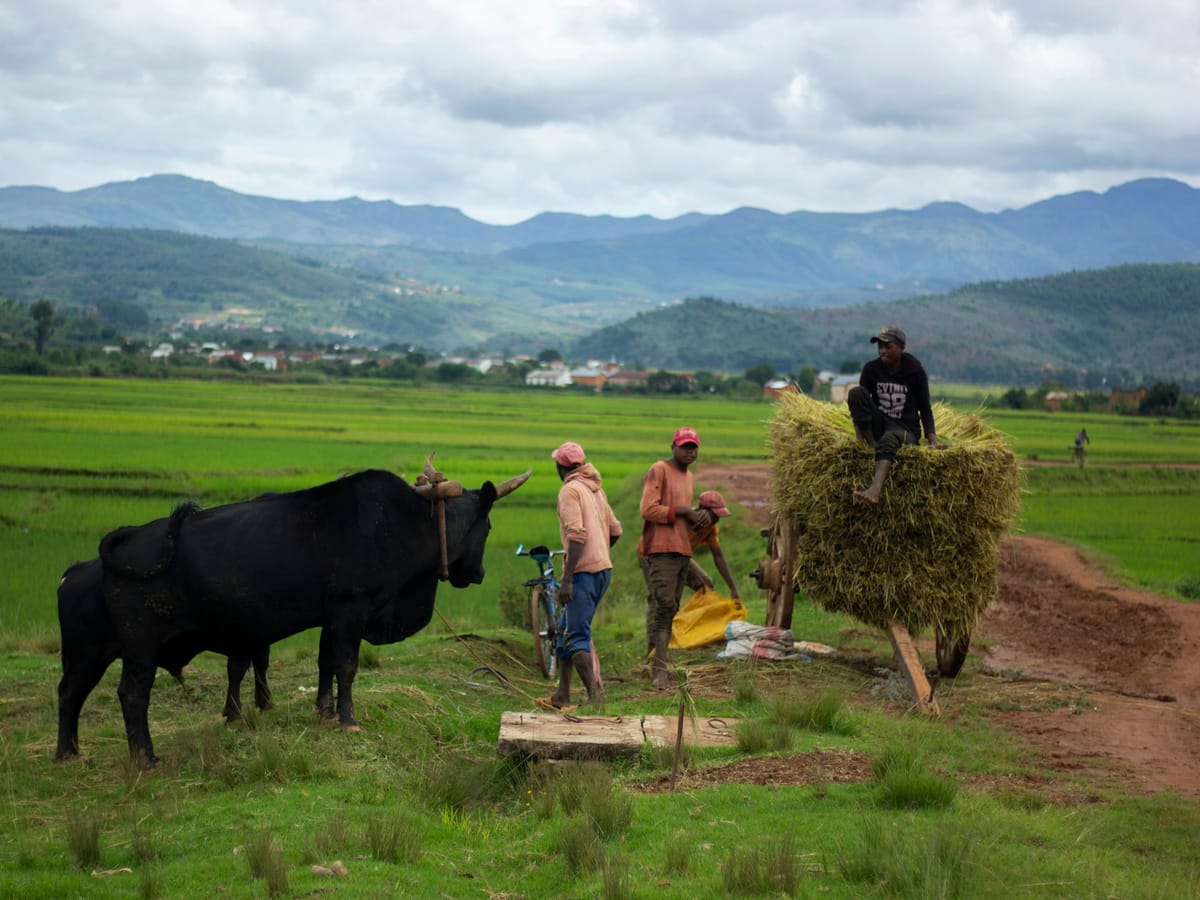
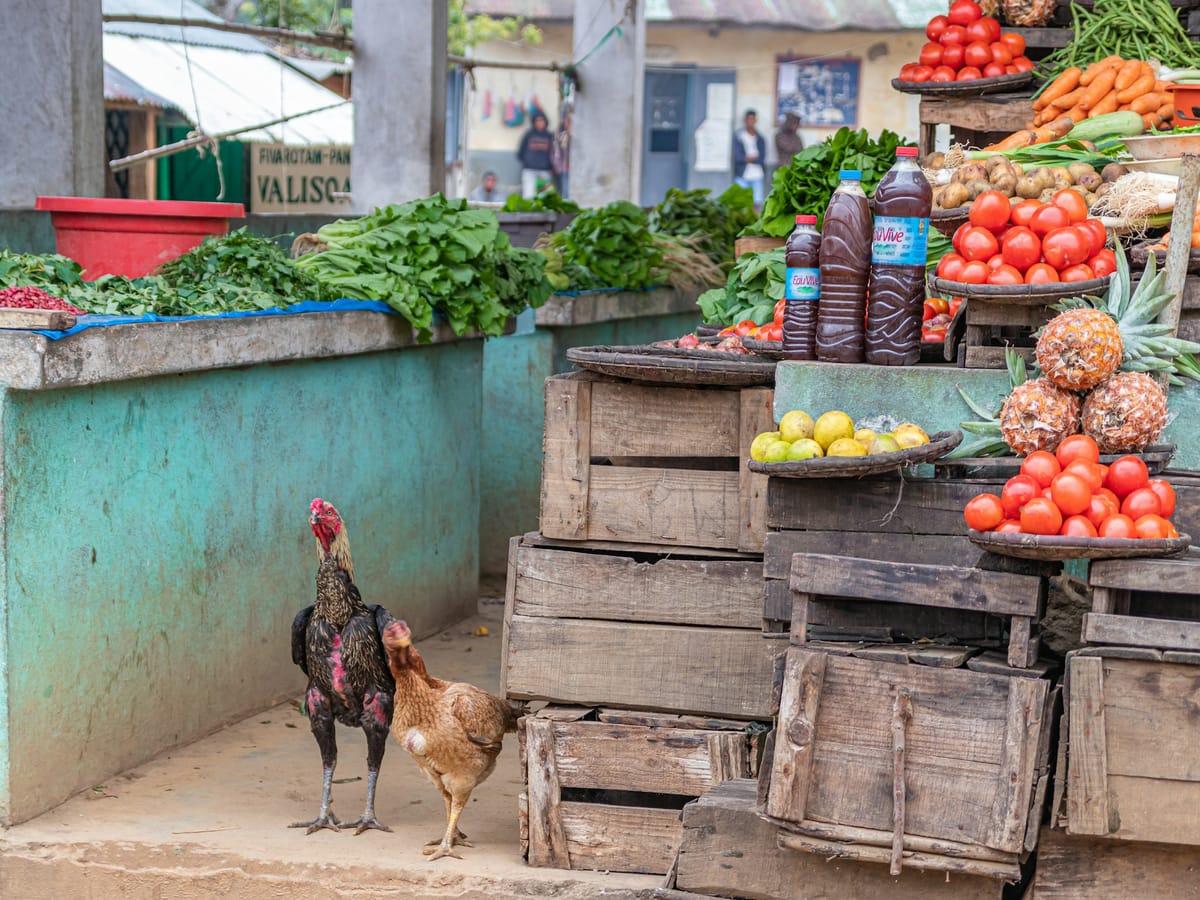
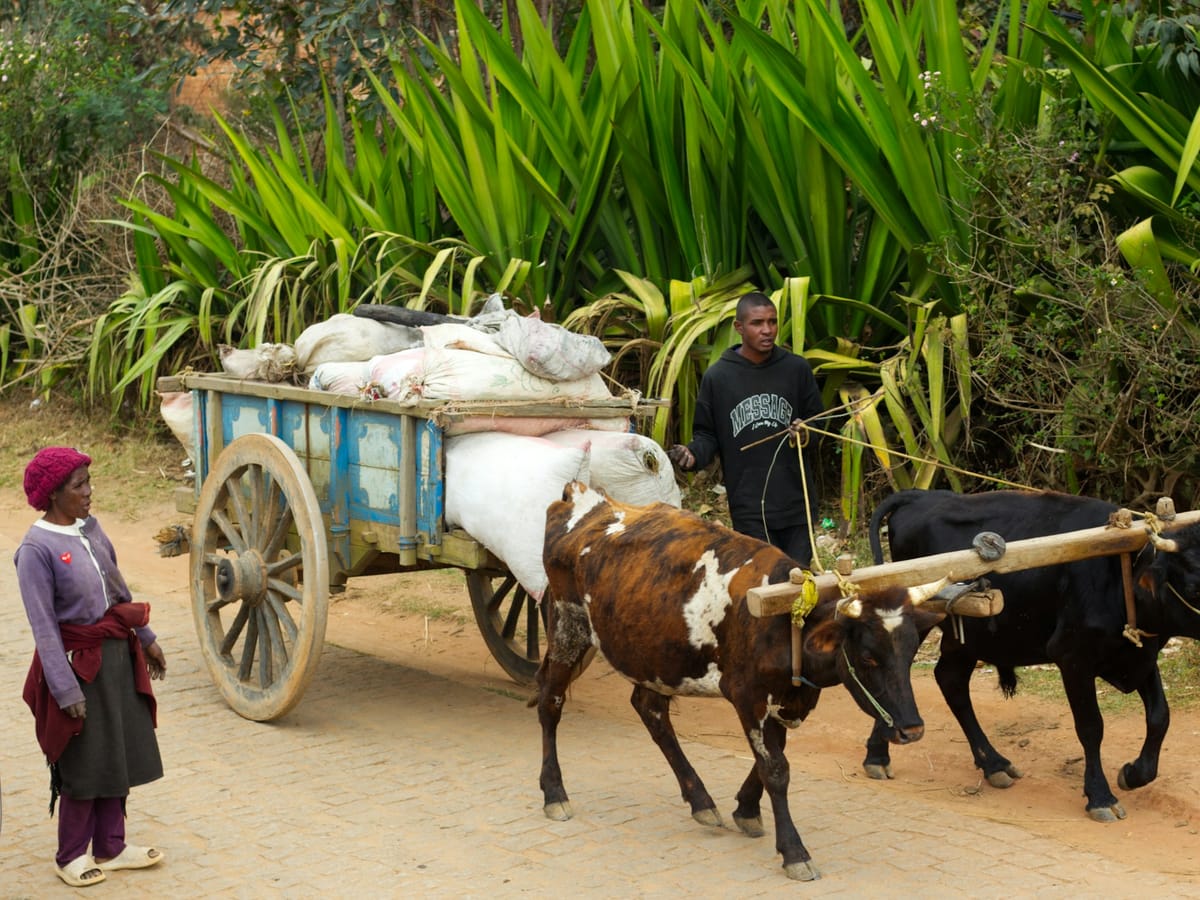
Encounters also happen in everyday life: a village market, koba being made in Talata Volonondry, a zebu-cart ride through a Sakalava village near Mahajanga, a shared meal. In Antsanitia, the ADTIA and AMADA associations introduce you to their work supporting the development of local villages.
Every region has its own customs and taboos, known as fady. Your guide will tell you how to greet people, what to wear, how to behave near a tomb or sacred site, and when it is better to put the camera away. Visits go at your pace, as part of a tailor-made trip, with time to chat, ask questions and try your hand.
100% tailor-made
On the spot
Things to do and see
The highlights of the activity, arranged around your pace and your wishes.
Zafimaniry woodcarving workshops
In Ambositra, watch the carvers at work and discover the geometric patterns of a craft inscribed by UNESCO as Intangible Cultural Heritage.
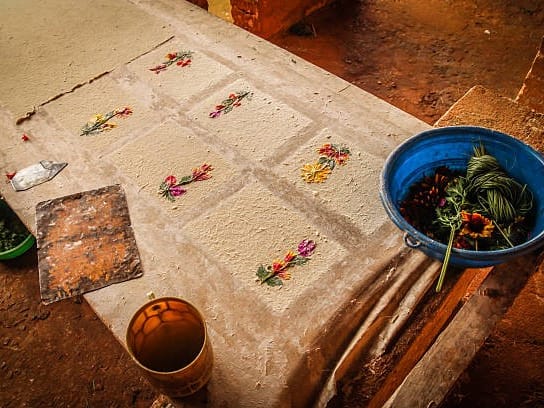
Antemoro paper in Ambalavao
Follow the making of this bark paper decorated with dried flowers, a technique introduced centuries ago on the east coast and adopted by the Antemoro people.
The villages of Betafo on foot
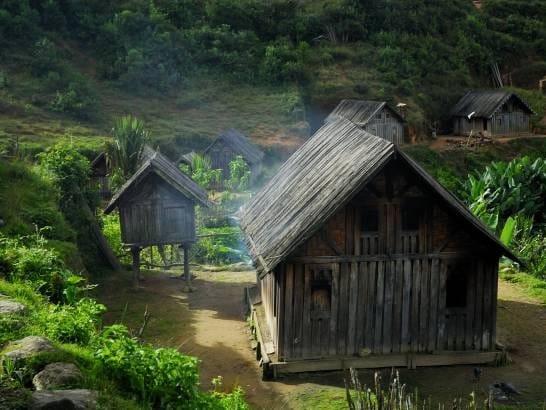
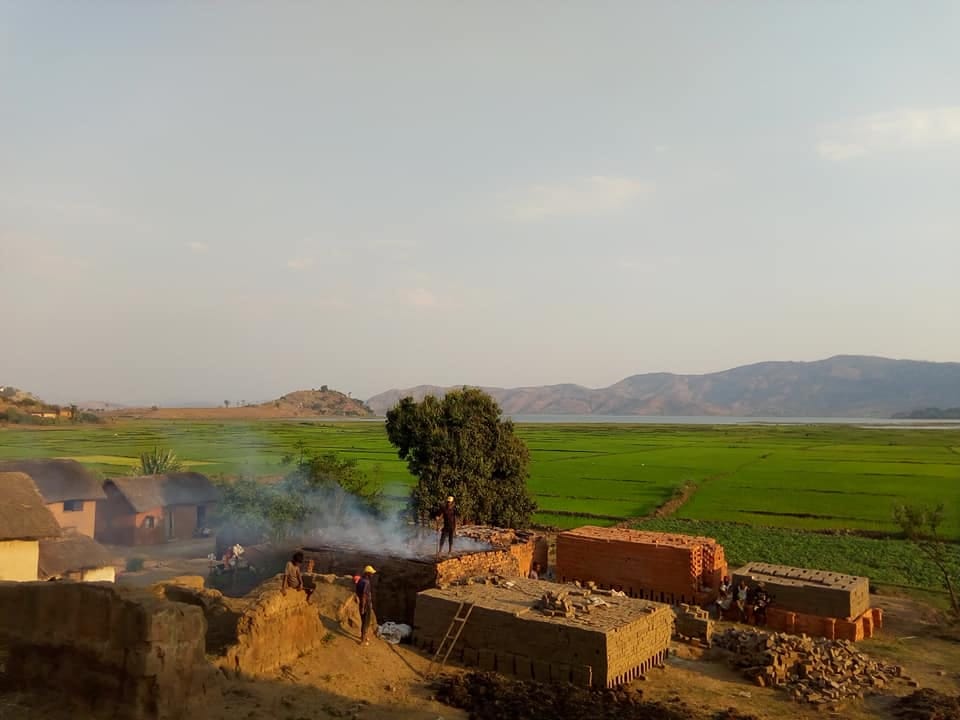
With a local guide, walk out to the villages around Betafo: blacksmiths, a rope-making and basketry workshop, terraced rice fields and hot springs.
Local markets and zebu market
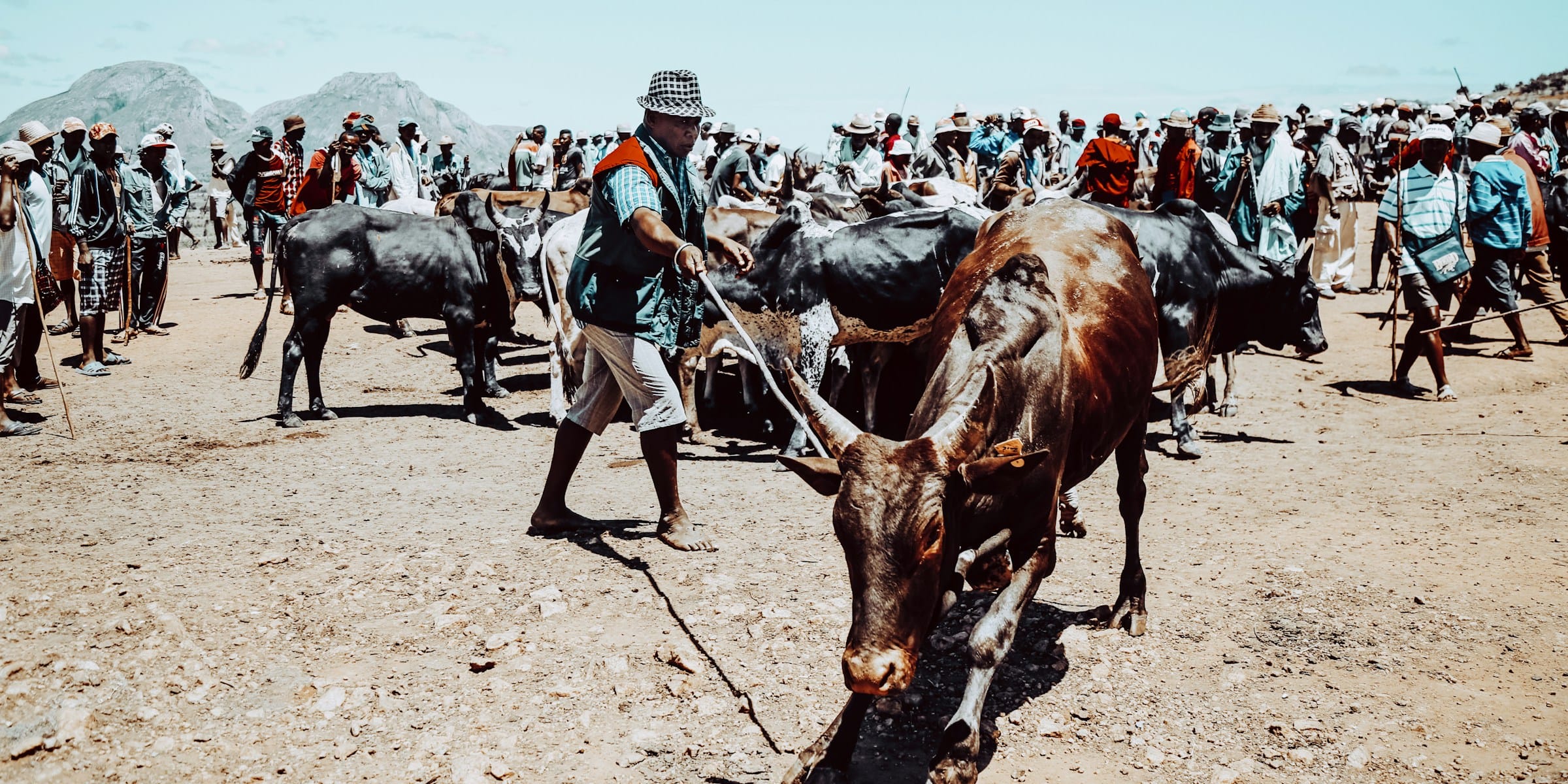
Browse a village market such as Betafo’s, busiest on Mondays, or watch the great zebu market in Ambalavao, held mainly on Wednesday mornings.
Koba and silk in Talata Volonondry
An hour to an hour and a half’s drive from the capital, watch koba being prepared, learn how Malagasy silk is made and share lunch with a local artist.
A day in Sakalava country
Near Mahajanga, ride to Antsanitia by zebu cart, visit a tree nursery and a fishing village, and try masonjoany, the traditional beauty mask worn by Sakalava women.
Destinations
Where to go
Our favourite places for this activity, to link together or to slot into one of our tours.
Highlands, Amoron’i Mania region
Ambositra
Madagascar’s woodcarving capital owes its reputation to the Zafimaniry, a Betsileo sub-group whose craft is inscribed on UNESCO’s list of Intangible Cultural Heritage. In the workshops you watch boxes, chessboards and figurines take shape, and learn to read the geometric patterns carved on shutters and doors.
Highlands, Vakinankaratra
Antsirabe and Betafo
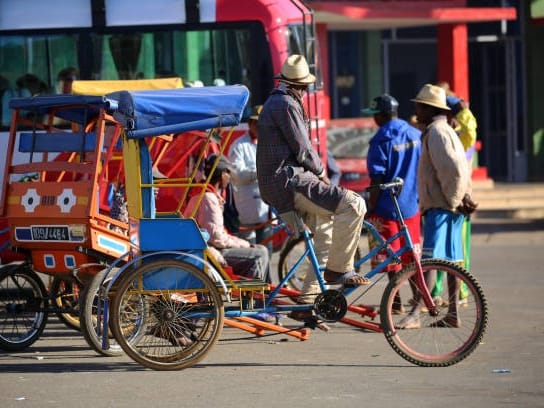
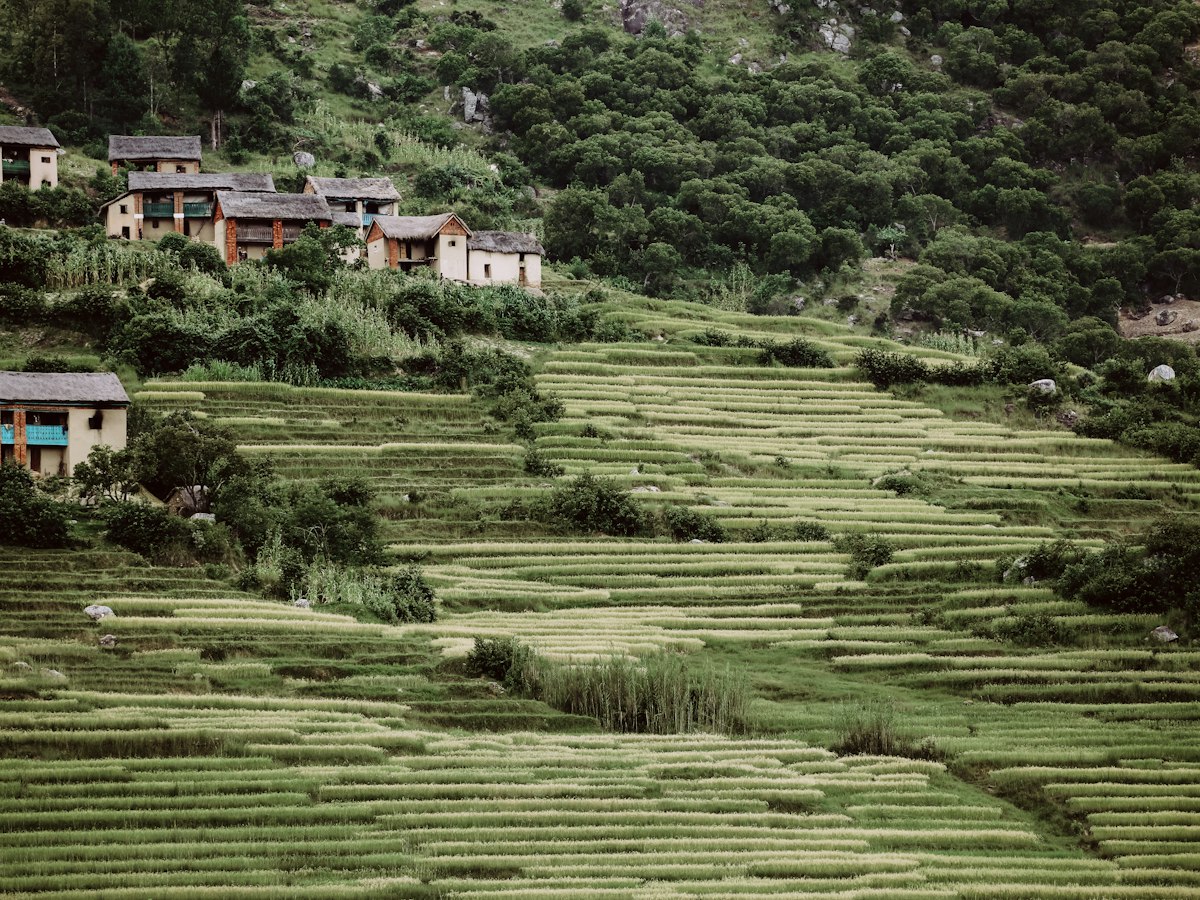
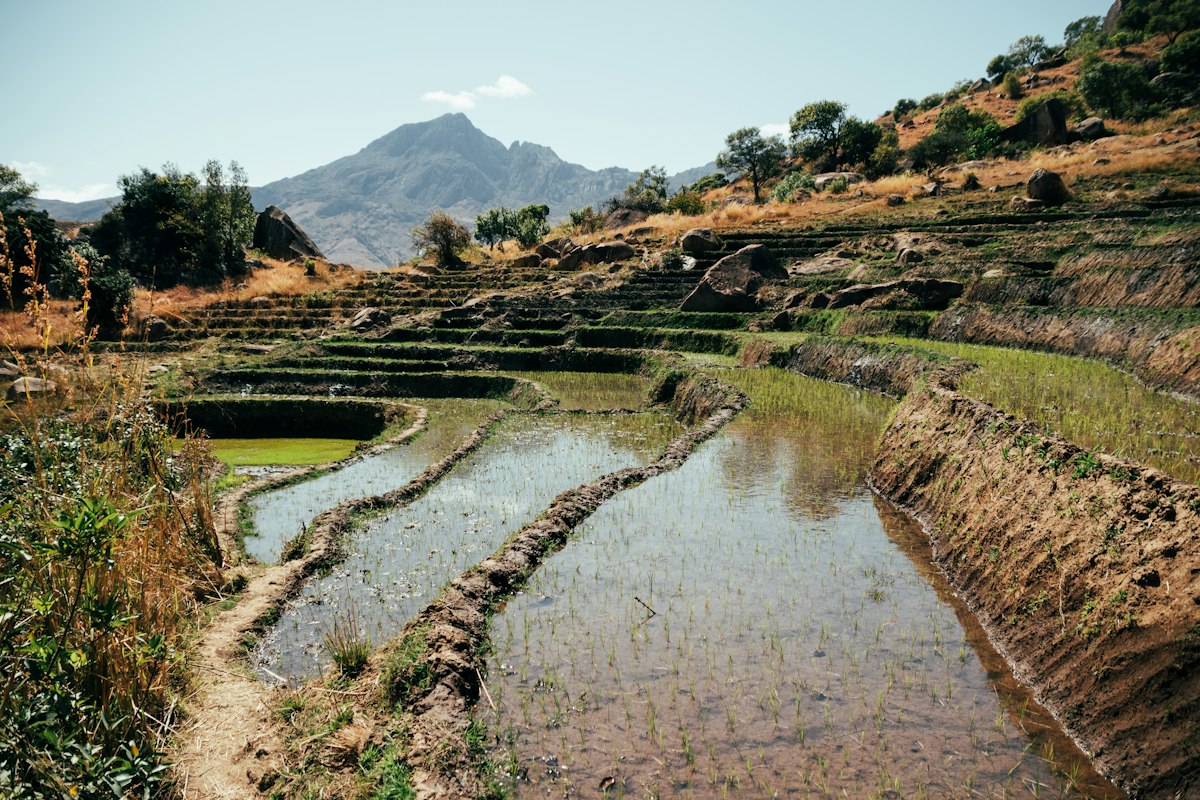
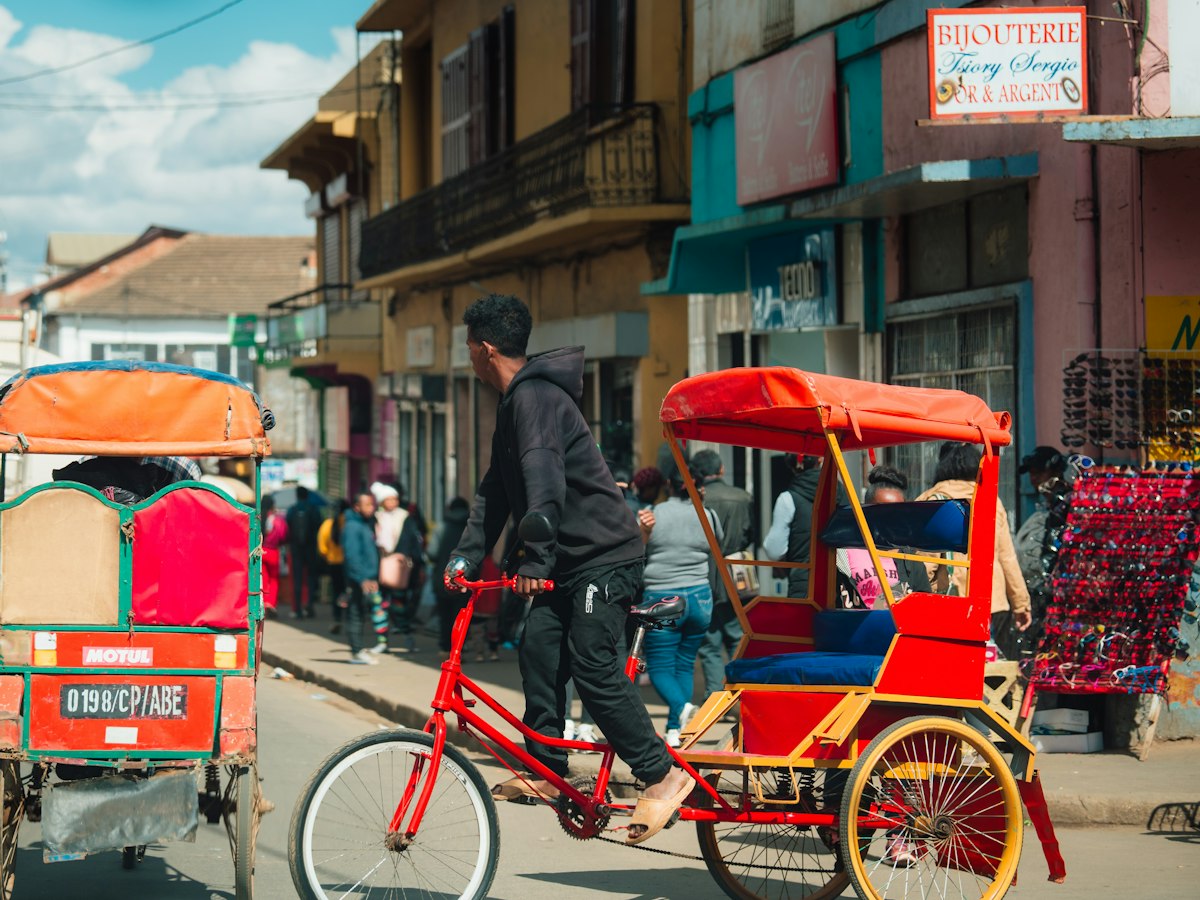
Madagascar’s rickshaw capital is full of workshops: embroidery, miniatures made from recycled materials, zebu-horn objects and traditional sweets. Some 22 km to the west, the villages around Betafo are explored on foot with a local guide: blacksmiths, rope-making and basketry, terraced rice fields and a market that is busiest on Mondays.
Southern Highlands, near Fianarantsoa
Ambalavao
On the RN7, Ambalavao is the main centre for Antemoro paper, made from bark and decorated with dried flowers. The town also hosts, mainly on Wednesdays, one of the country’s largest zebu markets, where herders come down from the hills with their cattle. Nearby, the community-run Anja reserve is home to ring-tailed lemurs.
Near Antananarivo
Talata Volonondry
An hour to an hour and a half’s drive from the capital, this Highland village is explored on foot in one and a half to two hours. You follow the making of koba, a cake of rice, peanuts and banana, discover how Malagasy silk is produced, then share a lively lunch with a local artist.
North-west, near Mahajanga
Antsanitia
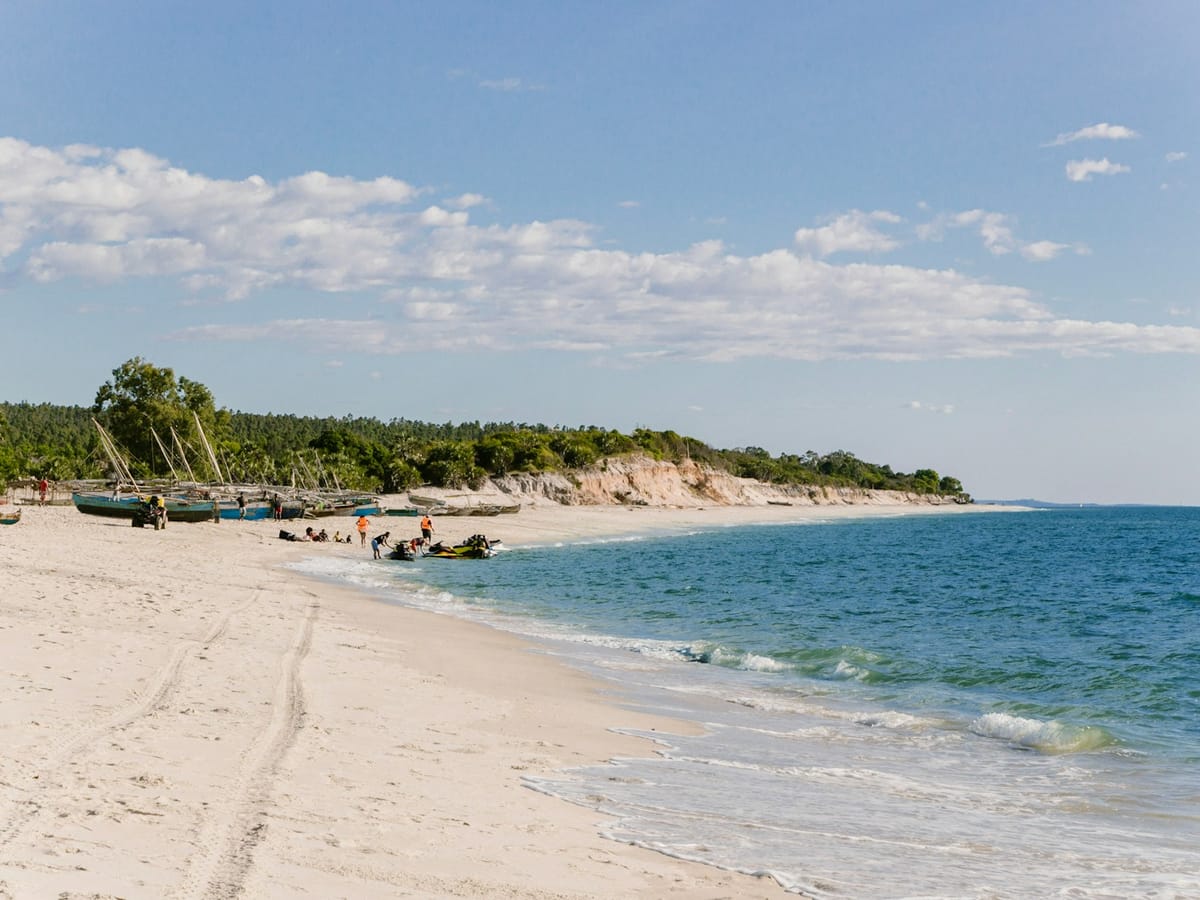
A day of immersion in Sakalava country: a boat trip up the Morira River, the village of Ladigy, then Antsanitia by zebu cart, through forest, a tree nursery and a fishing village. At the health centre, the ADTIA and AMADA associations present their work, and you can try masonjoany, the traditional face mask of Sakalava women.
In pictures
The activity in photos
A few images of the activity and of the places where you can enjoy it.
The right time
When to go
Encounters are possible all year round, but the dry season, from April to November, is the most comfortable: tracks to the villages are passable and days are mostly sunny. From June to August, mornings and evenings are cool in the Highlands. From December to March, the rainy season makes some tracks difficult, especially in the west.
Famadihana: family ceremonies, usually from June to September, by invitation only.
Ambalavao zebu market: mainly on Wednesday mornings, smaller on Thursdays.
Betafo market: busiest on Mondays.
Month by month
Janpossible
Febpossible
Marpossible
Aprideal
Mayideal
Junideal
Julideal
Augideal
Sepideal
Octideal
Novideal
Decpossible
Ideal
Possible
This month
Recommended season: Year-round, best April to November
In your bag
Gear and equipment
What is provided and what you should bring to make the most of the activity.
Provided
Local guide who acts as your interpreter
Private vehicle with driver-guide
Entry fees for workshops and sites in your programme
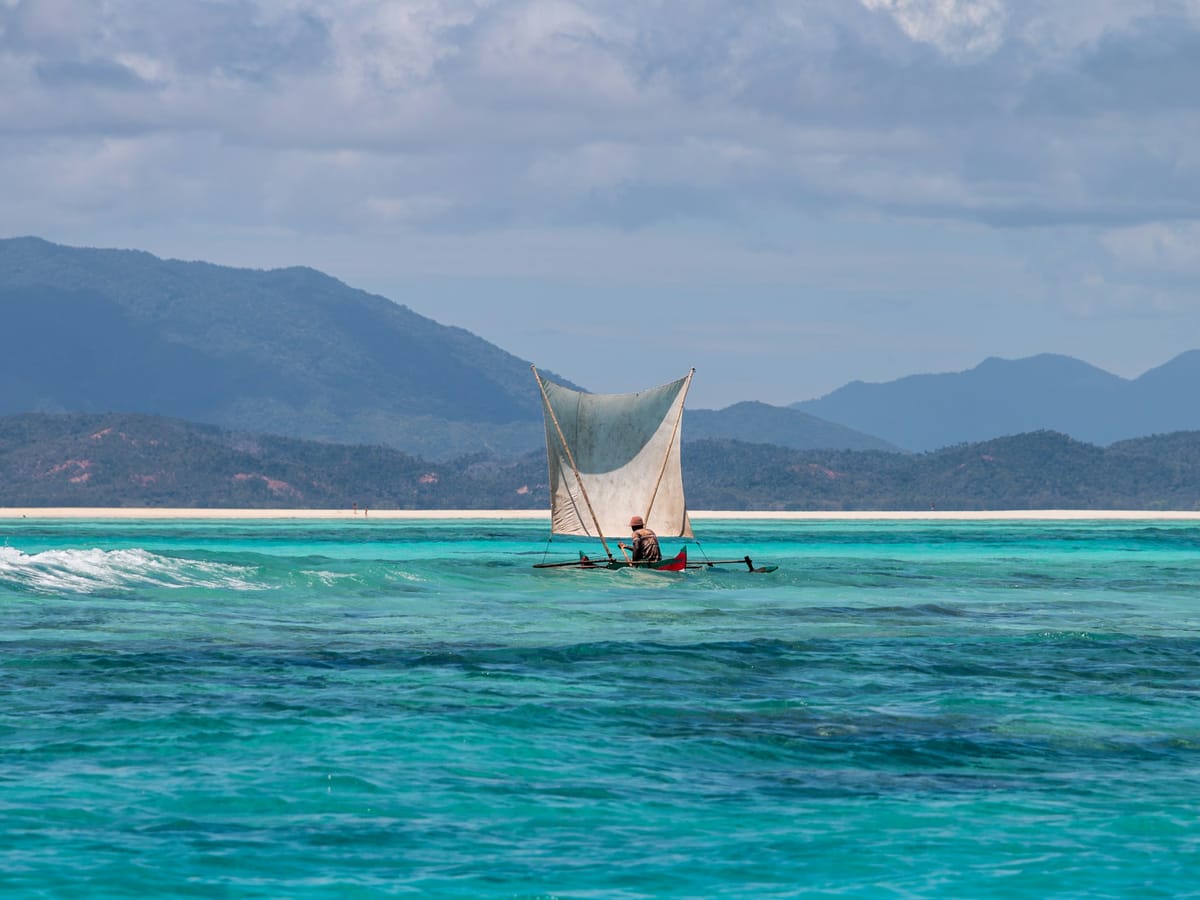
Zebu cart or pirogue where the programme includes one
What to bring
Clothes covering shoulders and knees for villages
Comfortable closed shoes
Small change in ariary for purchases
Jumper or fleece for cool Highland evenings
Hat, sunglasses and mineral sunscreen
Reusable bag for your craft purchases
A few Malagasy words: salama (hello), misaotra (thank you)
Peace of mind
Safety advice
A few simple rules so you can enjoy the activity with peace of mind. On site, always follow your guide’s instructions: they know the ground and the conditions of the day.
Always ask people’s permission before photographing them, especially children, elders and during ceremonies.
Ask your guide about local fady: some sites, lakes or tombs are off limits, and you should never point at a tomb with your finger.
Drink only bottled or treated water and avoid raw vegetables washed in tap water.
Malaria is present in much of the country: seek medical advice on suitable prevention before you travel.
At markets, keep valuables out of sight in a closed bag worn in front of you.
Take out travel insurance that covers medical costs and repatriation.
With BEMIRAY
Why choose this activity?
Guides who bridge the gap
Our local guides connect you with artisans and villagers: they translate, explain customs and help you find the right way to behave, without ever being intrusive.
Local associations on the programme
BEMIRAY programmes include associations such as ADTIA and AMADA in Antsanitia and Zazamalala in Morondava, and favour visits that respect local communities.
A fully tailor-made itinerary
Half a day of workshops between two stops on the RN7 or several days of immersion: you choose, we build the itinerary around it and reply within 48 hours.
An anthropologist’s eye
Founded by an anthropology enthusiast, professional guide and former tour leader, BEMIRAY approaches these encounters as a way of understanding Malagasy culture, never as a show.
Good to know
Your questions
Another question? Our team replies within 48 hours, in English or in French.
A workshop visit usually takes an hour or two; the Talata Volonondry walk lasts one and a half to two hours; the walk to the villages around Betafo takes four to seven hours. Everything can be combined over one or several days.
Are these visits suitable for children?
Yes, they work well for families: children love watching an object take shape in an artisan’s hands. We adapt walking times and plan breaks, and for younger children the Betafo walk can be shortened or partly done by car.
Can I bring gifts for local people?
Please avoid handing out sweets, money or pens to children, as it encourages begging. If you would like to help, your guide can point you towards a school, a health centre or an association. Buying directly from artisans is the simplest support.
Can I attend a famadihana?
The famadihana, or turning of the bones, is a family ceremony held in the Highlands, mostly between June and September. You can only attend if the family invites you; if the chance arises, your guide will explain the etiquette and what to wear.
Which souvenirs can I bring home legally?
Choose raffia, embroidery, Antemoro paper, zebu horn or items made from common woods, and keep your receipts. Refuse anything made of rosewood, ebony or tortoiseshell, coral and any protected species: trading in them is banned or strictly controlled.
How can I combine these encounters with a tour?
They fit naturally into our Highlands and RN7 tours, such as “Rice Fields, Kingdoms & Rituals” or “Encounter Madagascar: Myth and Legend”, and into “Meet the Zen & Back to the Roots” near Mahajanga. We can also add them to any tailor-made itinerary.
Combine it
Our tours with this activity
Find this activity on these itineraries, or add it to the tour of your choice: every trip is tailored to your wishes.