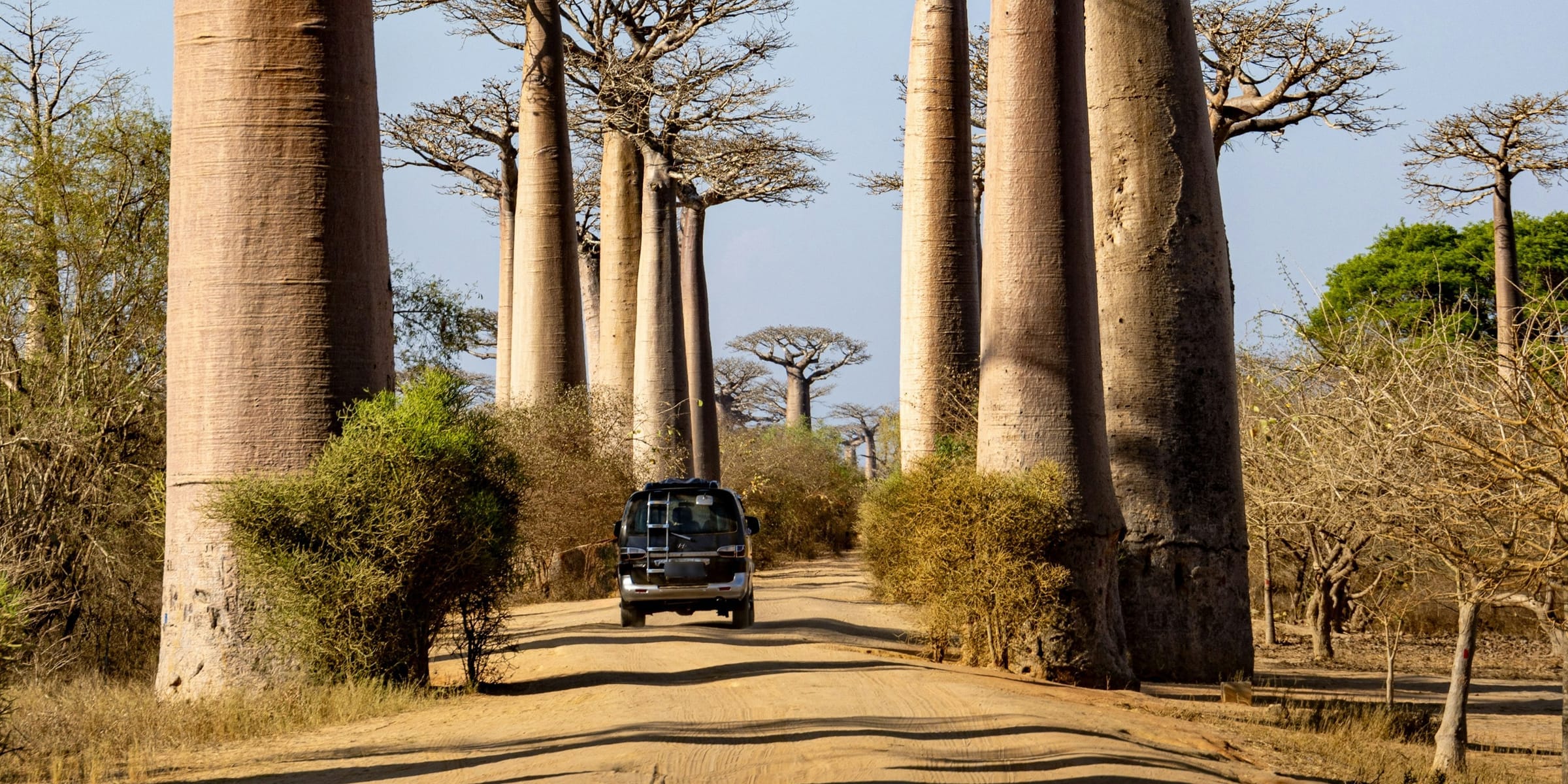
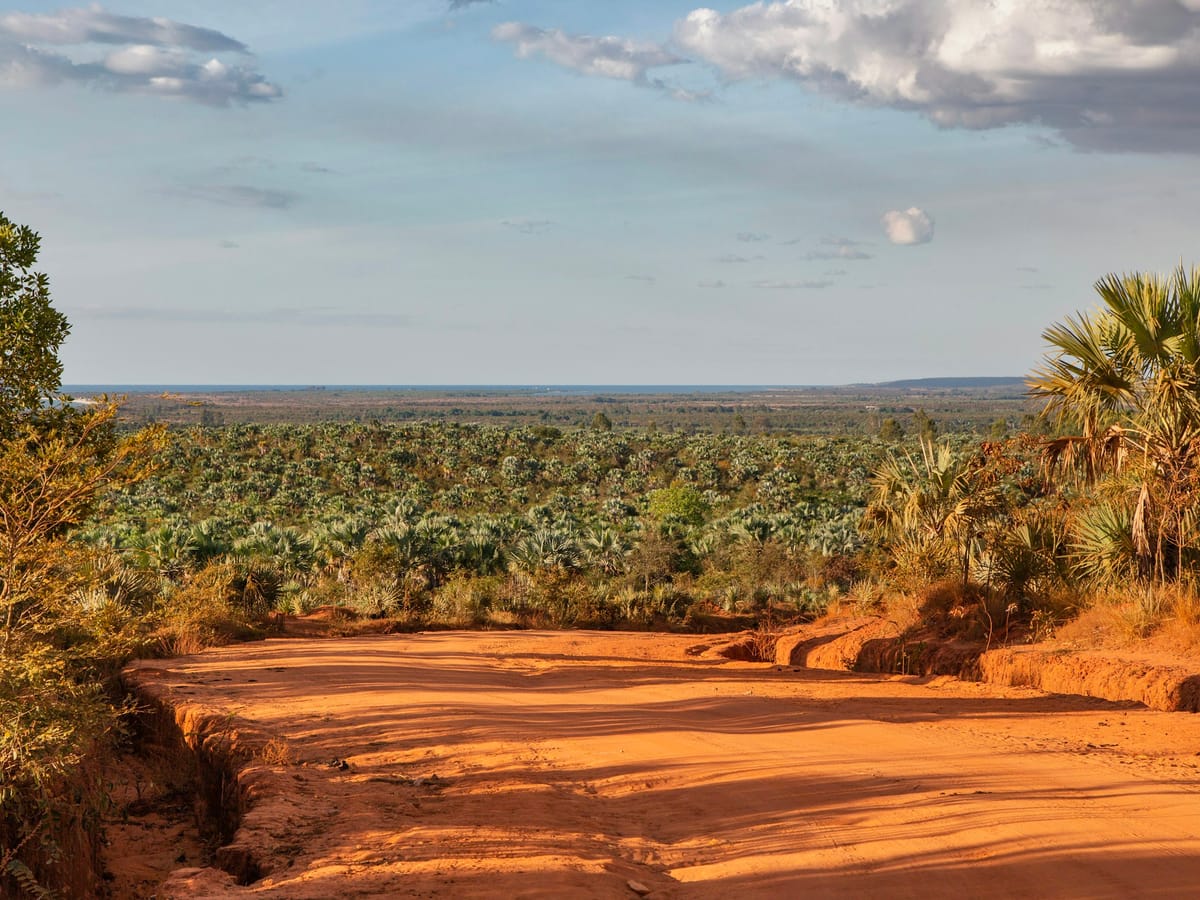
From the Avenue of the Baobabs to the Tsingy de Bemaraha, from the south-west’s sandy tracks to the Makay canyons: in a private 4×4 with an experienced driver-guide, tracks lead to the island’s most remote landscapes.
Who for Curious travellers, families depending on route
Season Dry season, May to October
The activity
What is it like?
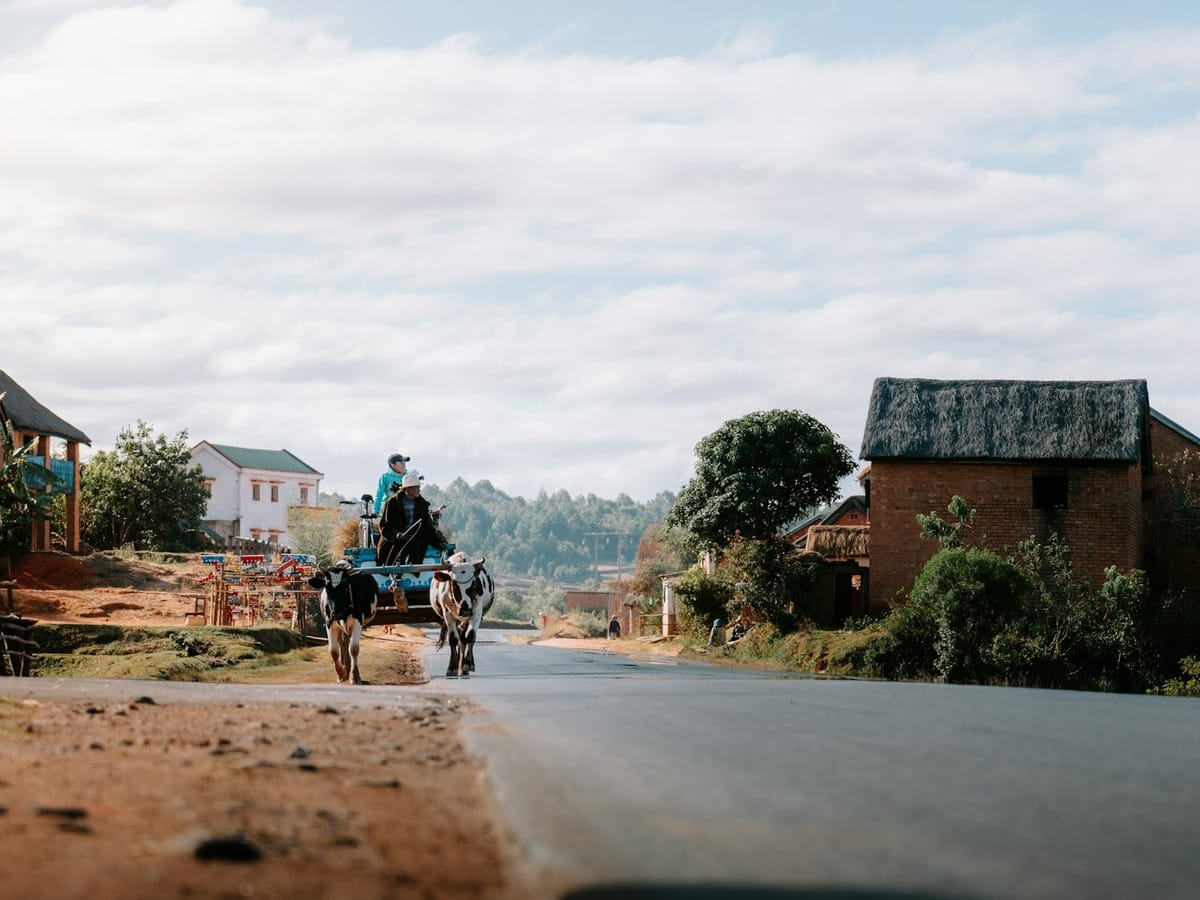
Away from the main tarmac roads, many Malagasy roads are tracks of earth, sand or laterite. The track is part of the journey: you travel in a private 4×4 with a driver-guide who knows every ford, ferry and village along the way. Depending on the route, a stage lasts from a few hours to a long day, broken up by stops to take photos, have a picnic or greet villagers.
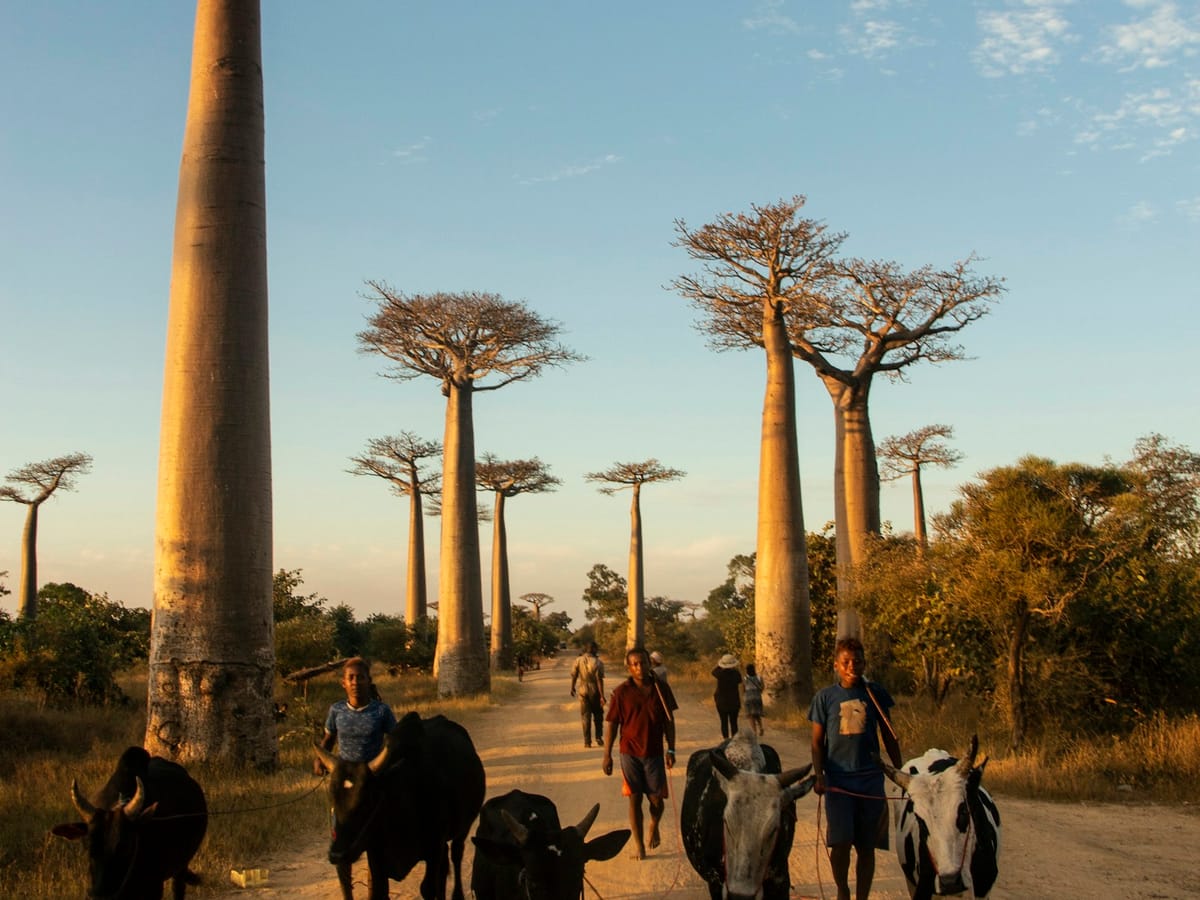
The great classics are in the west: the track from Morondava to Bekopaka, via the Avenue of the Baobabs and the ferry at Belo-sur-Tsiribihina, to the Tsingy de Bemaraha, or the coastal track running south from Belo-sur-Mer to Salary and Ifaty. Other tracks lead to the Makay massif, the Tsingy Rouges in the north and the Cirque Rouge near Mahajanga.
These journeys call for some patience: bumps, dust, waiting for the ferry and stages of eight to nine hours on the longest sections. In return, they open up regions that few travellers reach. We adapt the pace, the stages and the comfort of your accommodation to your wishes, and journeys are planned in daylight.
100% tailor-made
On the spot
Things to do and see
The highlights of the activity, arranged around your pace and your wishes.
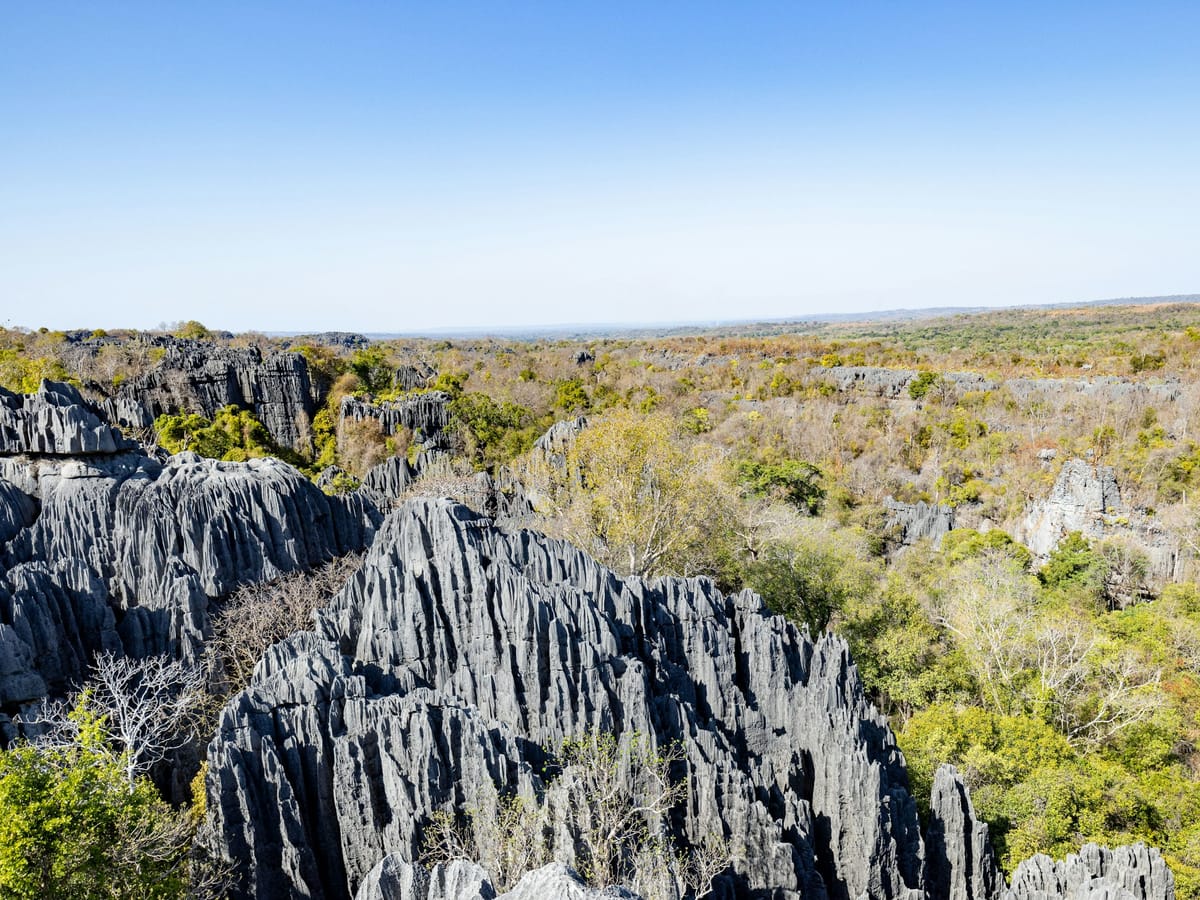
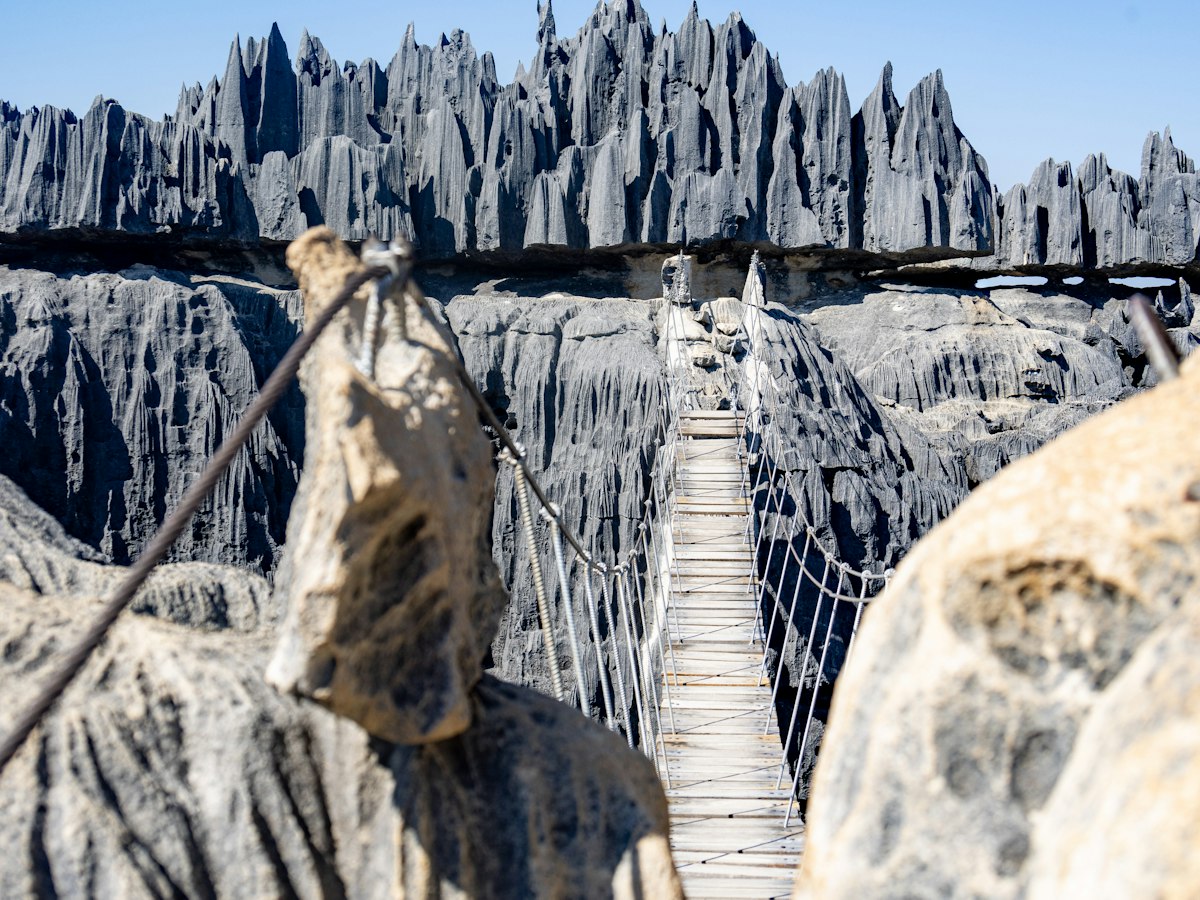
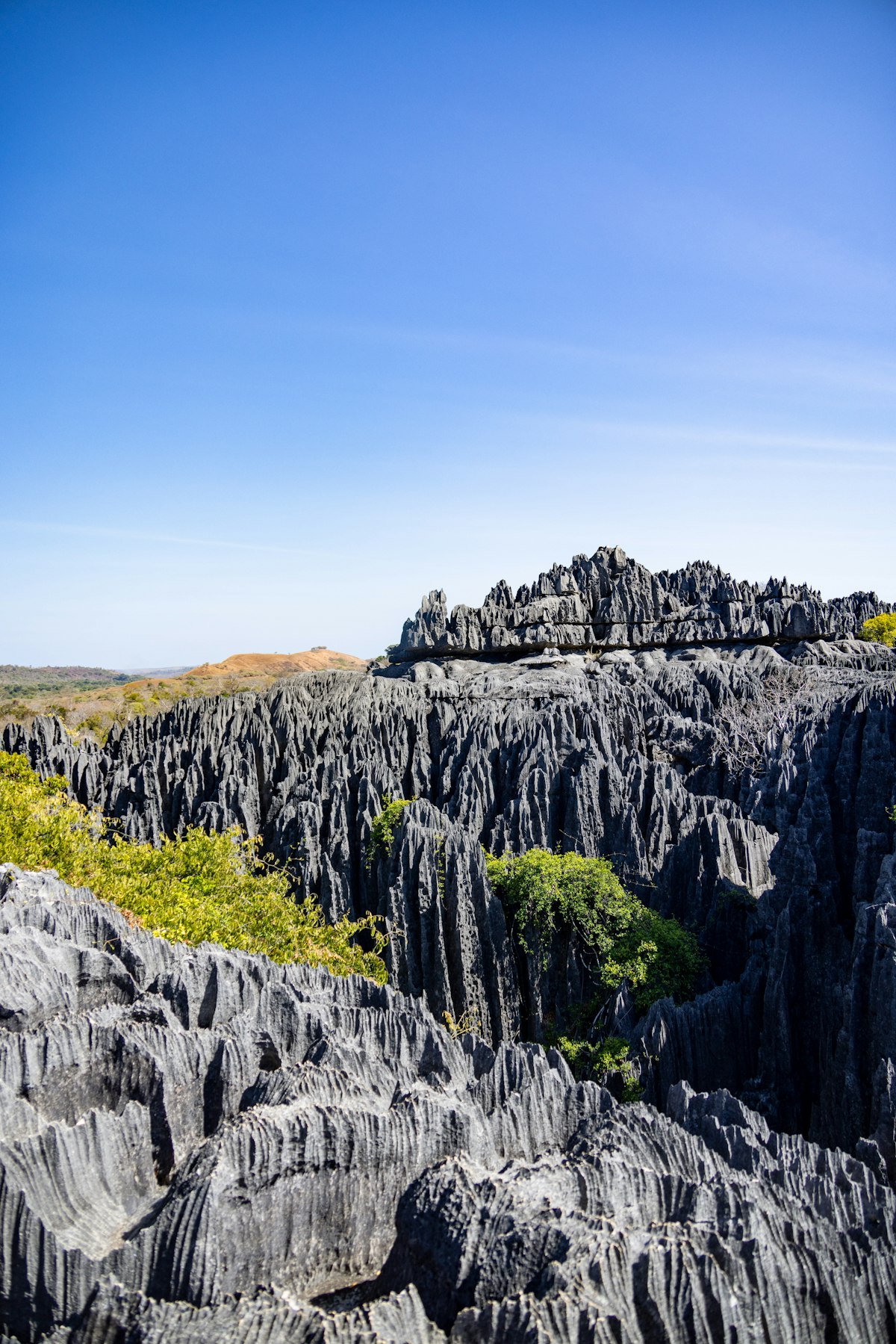
The road to the Tsingy
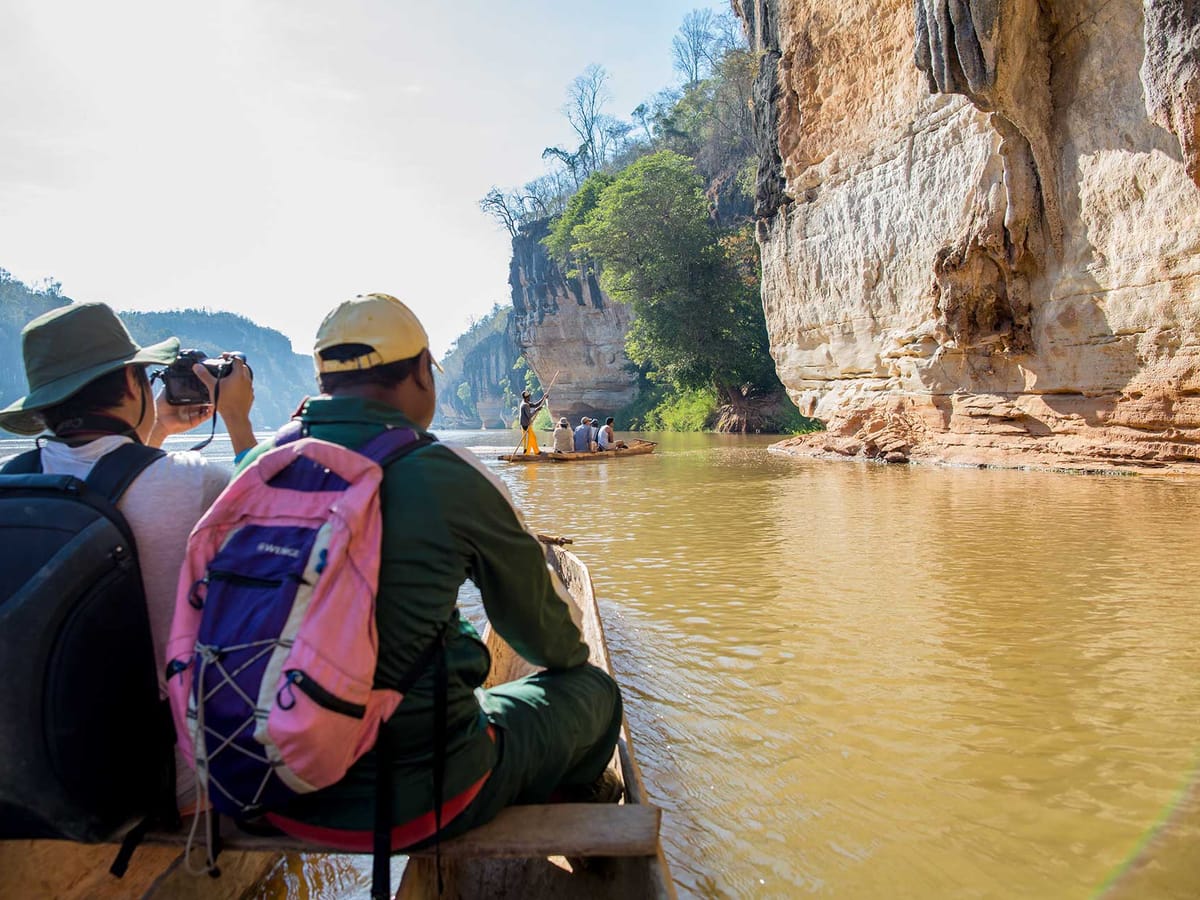
From Morondava to Bekopaka, around 200 km of track in a single day, with a ferry crossing over the Tsiribihina, then another over the Manambolo on arrival.
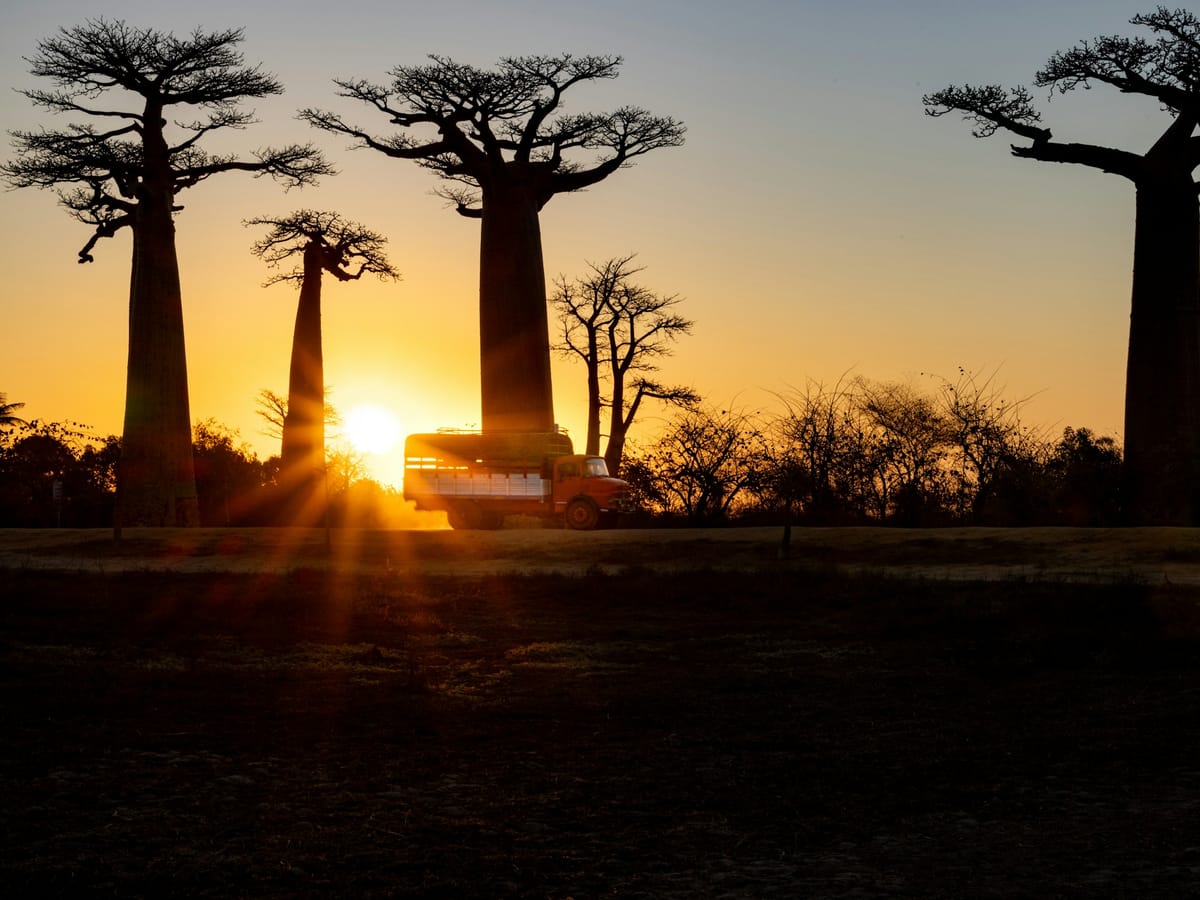
Sunset over the baobabs
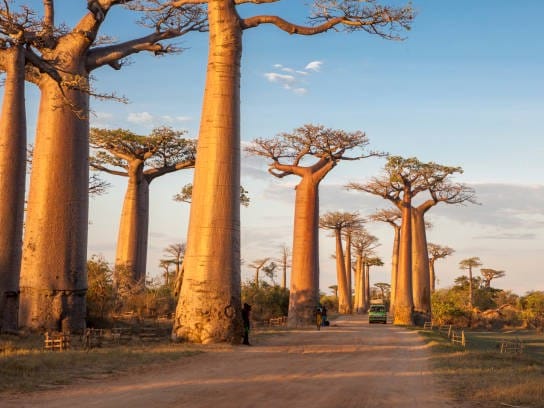
Stop late in the day at the Avenue of the Baobabs, some forty minutes from Morondava, as the silhouettes of the Adansonia grandidieri stand out against the sky.
A stop in Kirindy Forest
Depending on your programme, stop in this dry forest near the Belo-sur-Tsiribihina track, one of the best places to try to spot the fossa, the island’s largest carnivore.
The great south-west coastal track
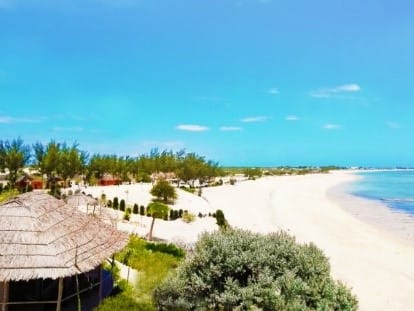
From Belo-sur-Mer to Salary via Morombe, several days on the track through salt pans, fords, bush, dunes and Vezo fishing villages.
To the gateway of the Makay
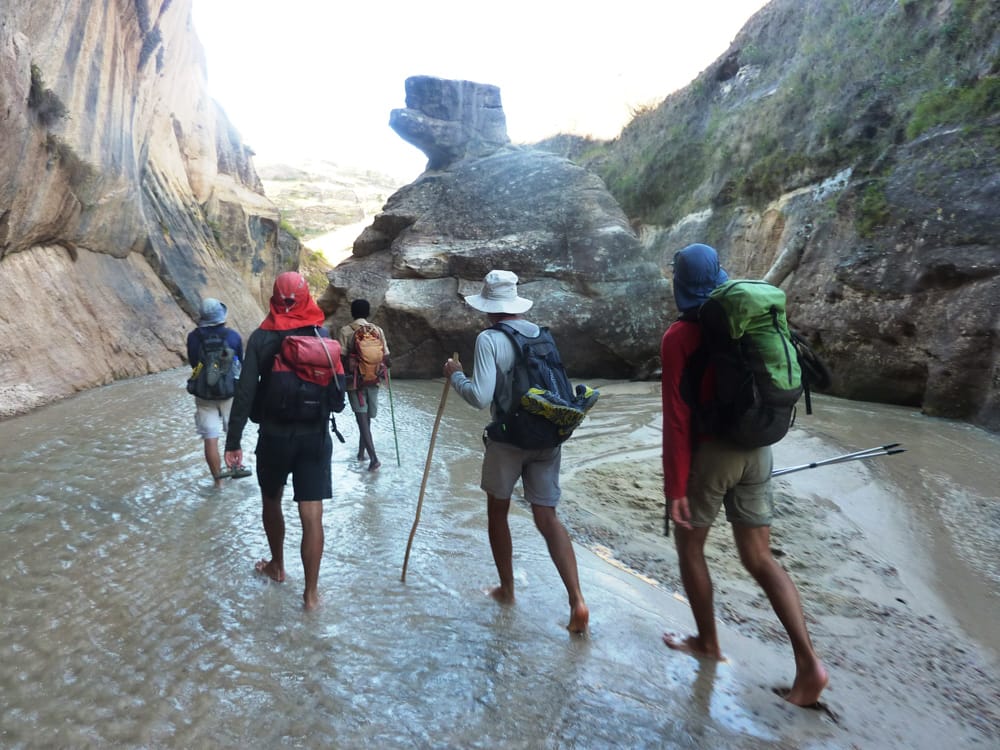
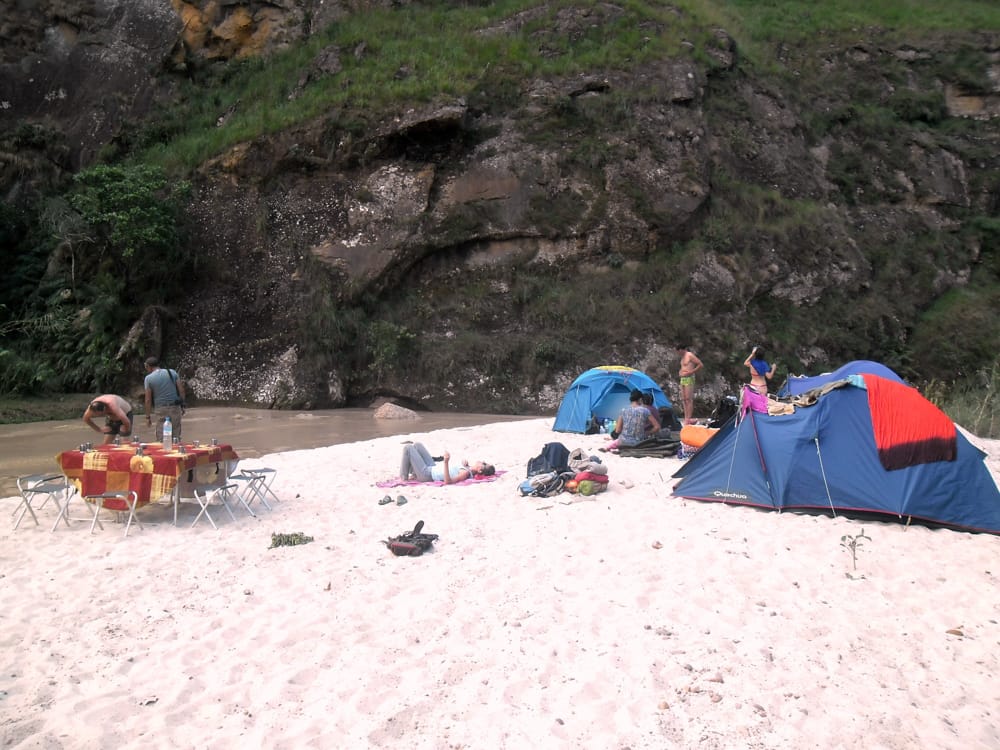
From Ranohira, a day on the track and a motorised ferry across the Mangoky take you to the village of Beronono, where the trek begins.
Tsingy Rouges and Cirque Rouge
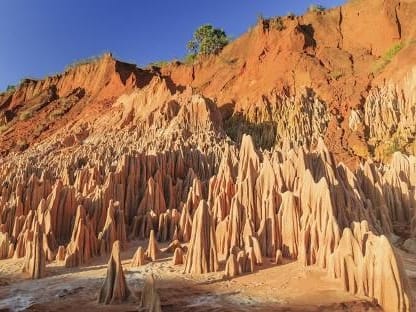
In the north, a dirt track leads to the pinnacles of the Tsingy Rouges; near Mahajanga, the 4×4 takes you to the Cirque Rouge and the sacred Lake Mangatsa.
Destinations
Where to go
Our favourite places for this activity, to link together or to slot into one of our tours.
West, from Morondava to Bekopaka
Road to the Tsingy
One of the country’s best-known tracks links Morondava to Bekopaka, gateway to Bemaraha National Park: around 200 km and eight to nine hours on the road. It passes the Avenue of the Baobabs and, depending on your programme, Kirindy Forest, then the ferry at Belo-sur-Tsiribihina, before a second ferry over the Manambolo on arrival.
Morondava to Ifaty, via Morombe
South-west coastal track
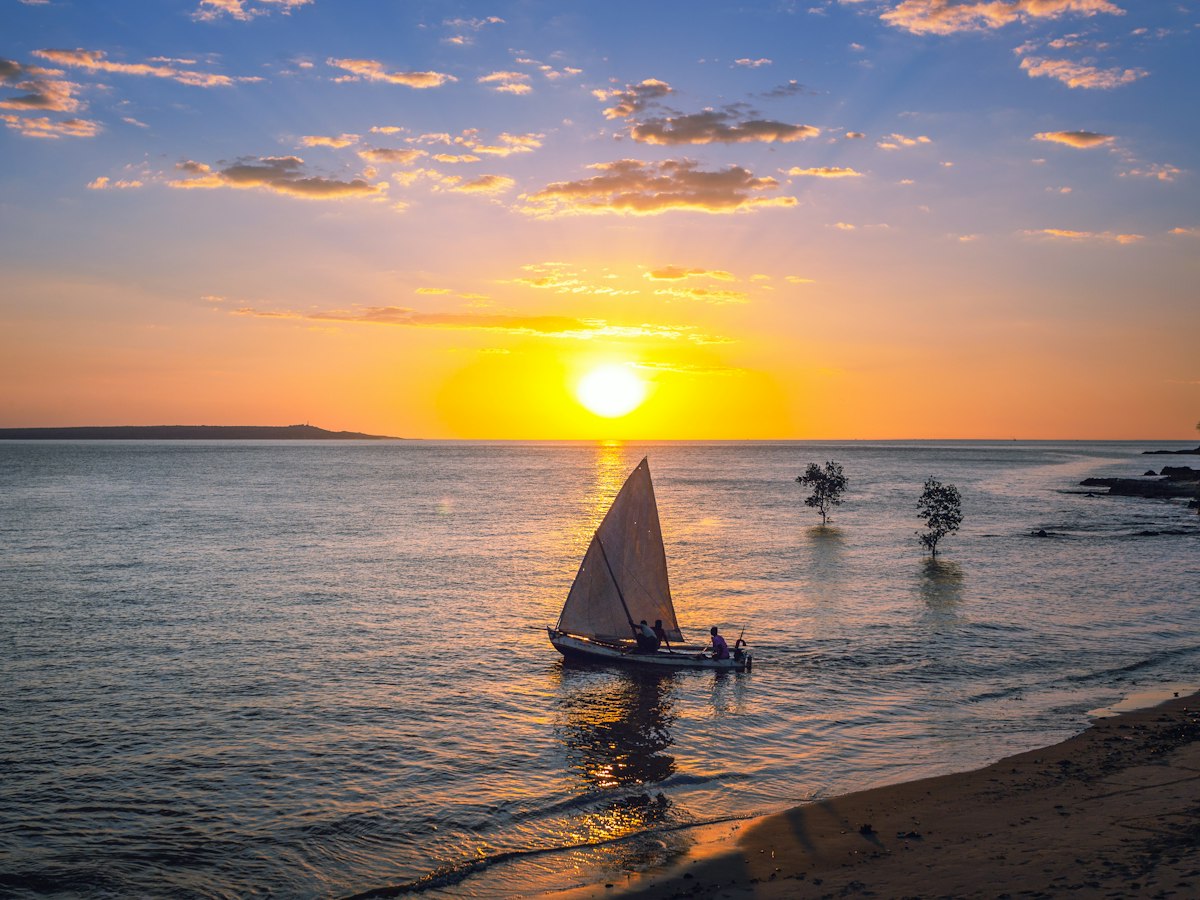
For lovers of adventure, this long sandy track follows the Mozambique Channel over several days: Belo-sur-Mer and its dhow-building yards, Morombe, then Salary and Ifaty. Salt pans, fords, bush, dunes and Vezo villages line the way, with stages of four to six hours and rest days by the sea.
Central-west, north of Isalo
Makay massif
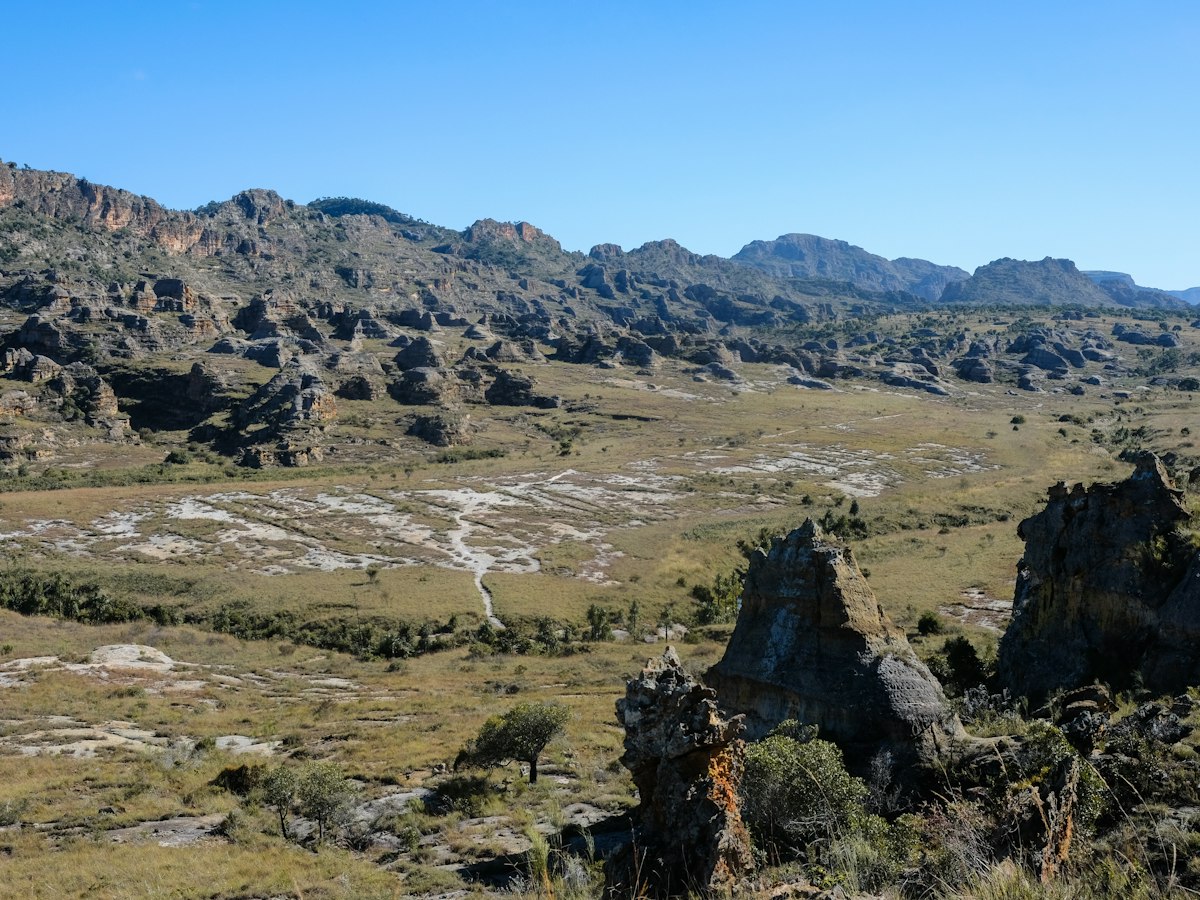
From Ranohira, 165 km of poorly maintained track lead to the Mangoky River, crossed by motorised ferry to Beroroho. Another 65 km of track bring you to Beronono, where the trekking porters are waiting. A full day’s approach to one of Madagascar’s wildest and least explored massifs.
North, around Diego-Suarez
Tsingy Rouges and the north
Some 60 km from Diego-Suarez, a dirt track leaves the RN6 for the Tsingy Rouges, red pinnacles sculpted by erosion. The 4×4 also takes you to Ankarana National Park, Amber Mountain and, on some tours, the Andrafiamena protected area, through dry forests, volcanic uplands and turquoise bays.
North-west, around Mahajanga
Cirque Rouge and Lake Mangatsa
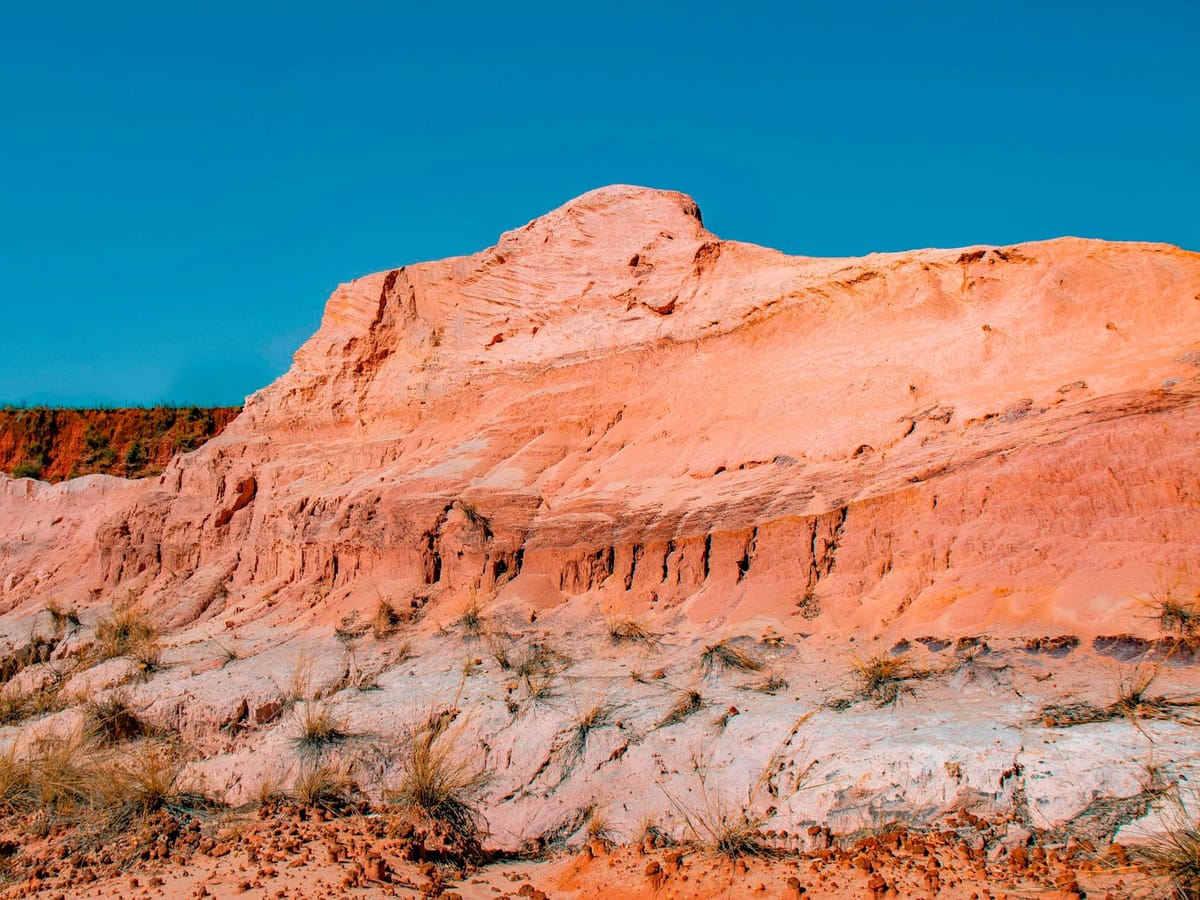
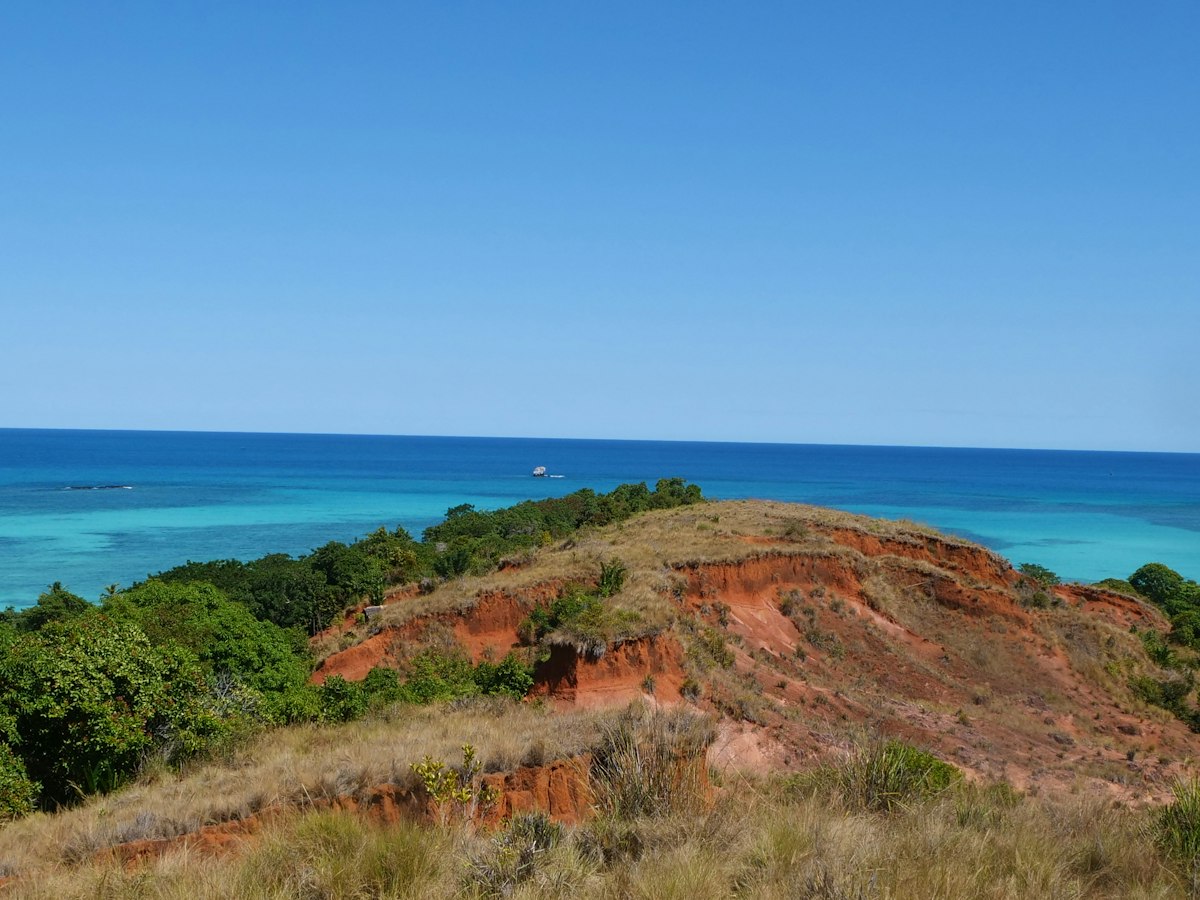
North of Mahajanga, beyond Amborovy airport, the Cirque Rouge reveals gullied cliffs in shades of ochre, pink and carmine. Further north, a dirt track leads to the sacred Lake Mangatsa, a small, clear pond full of protected fish, where you can see baobabs and sifakas. A day out by 4×4, with a picnic in the shade.
In pictures
The activity in photos
A few images of the activity and of the places where you can enjoy it.
The right time
When to go
The dry season, from May to October, is the best time: the tracks are passable, the ferries run and Bemaraha National Park is open. April and November are still possible, though tracks may still be damp or the first rains may arrive. From December to March, the rainy season cuts many tracks in the west and to the Makay, and the Bemaraha tsingy generally close to visitors.
Road to the Tsingy: generally passable from May to November.
Makay: accessible only in the dry season, April to November.
October–November: intense heat in the west, very early starts.
Month by month
Jannot advised
Febnot advised
Marnot advised
Aprpossible
Mayideal
Junideal
Julideal
Augideal
Sepideal
Octideal
Novpossible
Decnot advised
Ideal
Possible
Not advised
This month
Recommended season: Dry season, May to October
In your bag
Gear and equipment
What is provided and what you should bring to make the most of the activity.
Provided
Private 4×4 with driver-guide
Fuel, road taxes and parking
Ferry crossings included in the programme
Park entry fees and local guides in your programme
What to bring
Soft travel bag rather than a hard suitcase
Scarf or mask against the dust
Sunglasses, hat and mineral sunscreen
Light clothes and a jacket for cool mornings
Travel-sickness tablets
Wet wipes, hand gel and toilet paper
Head torch and power bank
Small change in ariary for stops
Peace of mind
Safety advice
A few simple rules so you can enjoy the activity with peace of mind. On site, always follow your guide’s instructions: they know the ground and the conditions of the day.
Avoid travelling at night: few roads are lit and many vehicles have no lights; our stages are planned in daylight.
Wear your seatbelt on every journey, even on slow, bumpy sections.
Trust your driver-guide, who decides whether to cross a ford, wait for the ferry or turn back if the track is too badly damaged.
Keep water within reach and drink regularly: heat and dust dehydrate you quickly.
Malaria is present in much of the country: seek medical advice before you travel and protect yourself against mosquitoes.
Bring your usual medicines and a small first-aid kit: on some tracks, the nearest health centre can be a long way off.
Take out travel insurance that covers medical costs and repatriation, as BEMIRAY’s insurance does not cover them.
With BEMIRAY
Why choose this activity?
Driver-guides who know the tracks
Our driver-guides know the state of the tracks, the ferry crossings and the villages along the way: they drive, explain the country and deal with the unexpected on the road.
A 4×4 just for you
With a private vehicle, you choose the photo stops, the pace and the length of breaks, without sharing the vehicle with strangers.
A fully tailor-made itinerary
A day on the track to the Avenue of the Baobabs or three weeks across the west and south: we build the itinerary with you and reply within 48 hours.
Stages designed around the tracks
We alternate long days with shorter stages, plan rest days, for instance in Belo-sur-Mer or Salary, and suggest a domestic flight when a track is too long.
Good to know
Your questions
Another question? Our team replies within 48 hours, in English or in French.
No: you are a passenger and the driver-guide does the driving. What matters is coping with bumps, dust and long days, up to eight or nine hours on the road to the Tsingy. Let us know about any back problems or travel sickness.
Are the tracks suitable for children?
Yes, with suitable stages: we shorten the days, plan breaks and, if needed, a domestic flight to avoid the longest journeys. For younger children, let us know when you book if you need a child seat.
Can I drive the 4×4 myself?
Our tours are designed with a private vehicle and a driver-guide who knows the tracks, the ferries and local customs: it is safer on these difficult roads, and you can make the most of the scenery. If you are thinking of hiring a car, tell us about your plans.
What happens if a track is cut off?
After heavy rain, a ford can rise or a ferry can stop running. Your driver-guide then adapts the route, waits until it is possible to cross or suggests another way; we advise keeping a little leeway in your programme.
What luggage should I bring?
Travel light, with one soft bag per person, which is easier to stow and to strap onto the roof. Keep a small bag within reach with water, sunscreen, a scarf, medicines and your camera.
How can I combine the tracks with a tour?
They are at the heart of our “Tsingy Adventure: Wild Madagascar Experience”, “Immersive Journey: Tsingy, Culture and Adventure” and “Makay Massif, the jewel” tours, as well as the excursions around Mahajanga in “Meet the Zen & Back to the Roots”. We can also add them to any tailor-made itinerary.
Combine it
Our tours with this activity
Find this activity on these itineraries, or add it to the tour of your choice: every trip is tailored to your wishes.