
- Home
- Activities
- RN7 road trip
Antsirabe, Ranomafana, Isalo, Toliara
The RN7 road trip with a driver-guide
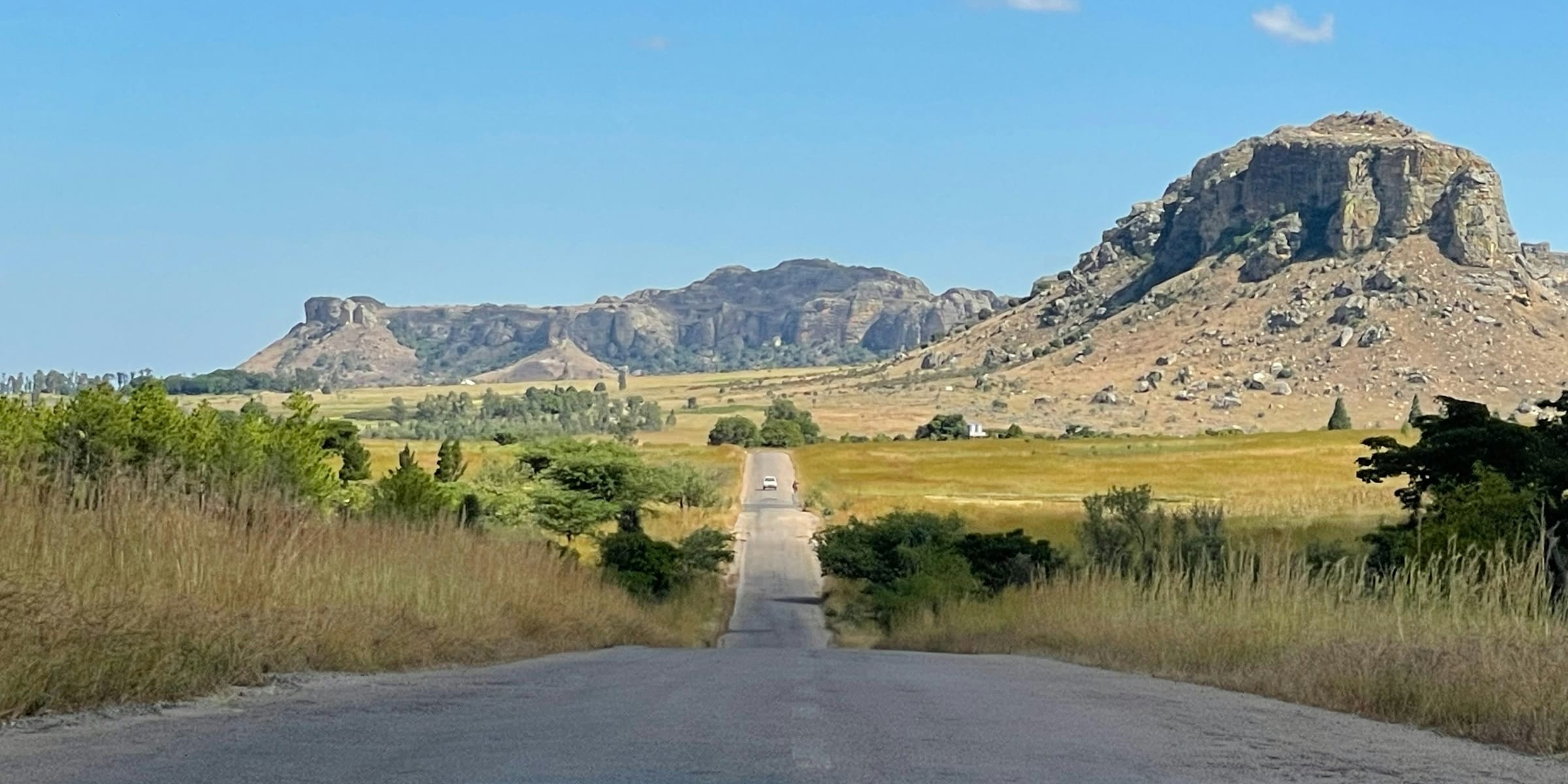
Between Antananarivo and Toliara, National Road 7 runs from the Highlands down to the southern savannahs, close to the Ranomafana rainforest. With your own driver-guide and private vehicle, you travel it at your own pace, one stop at a time.
- Duration Eight days to two weeks
- Level Easy, with long driving days
- Who for All travellers, families included
- Season Best from April to October
The activity
What is it like?
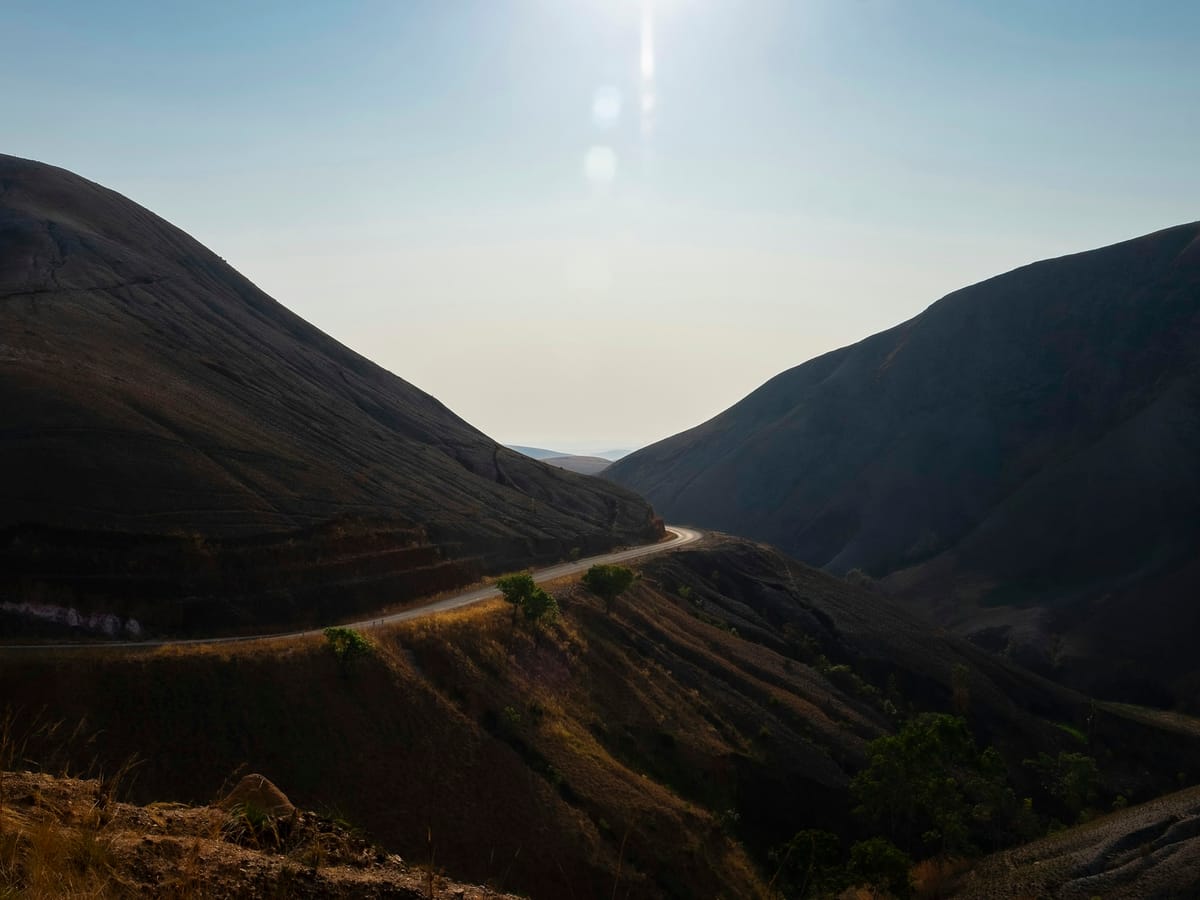
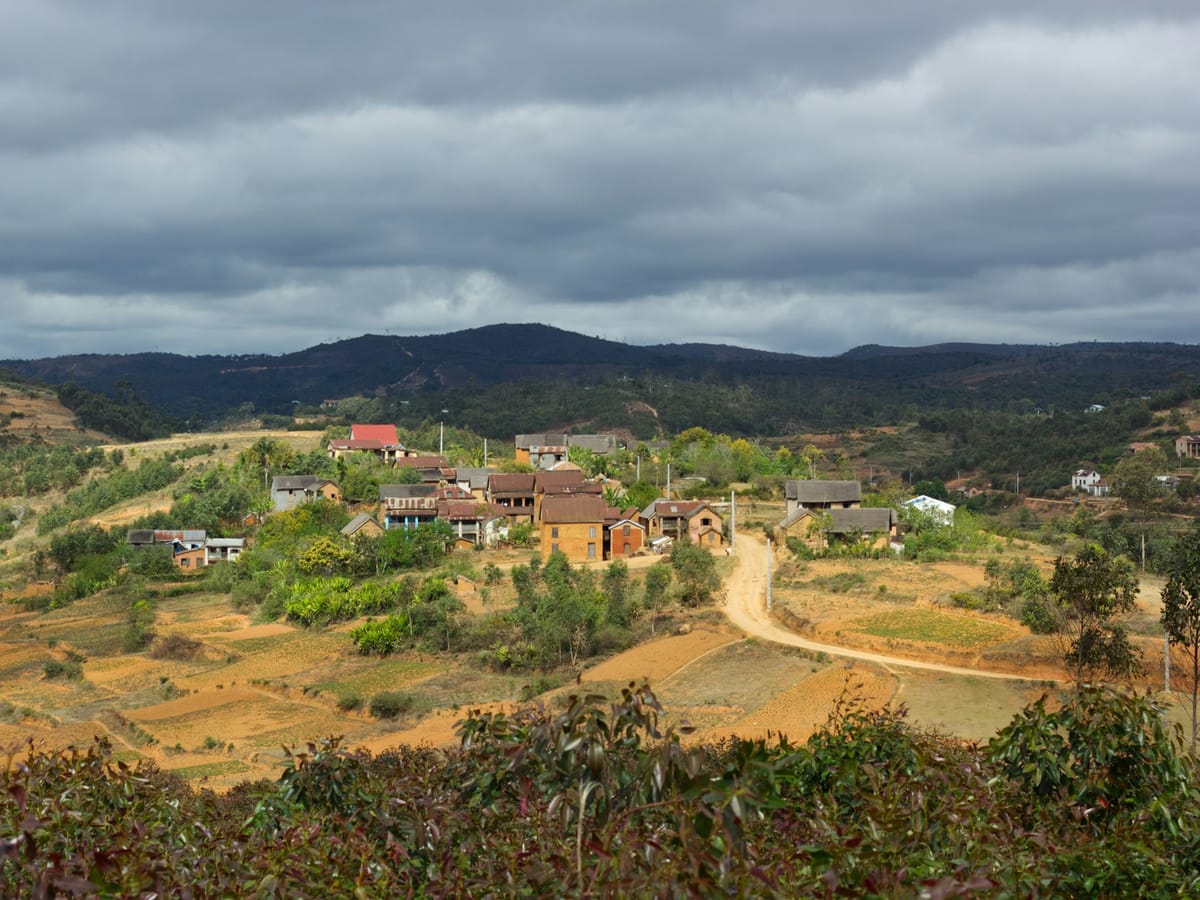
The RN7 is one of the country’s main roads: more than 900 kilometres of tarmac between Antananarivo and Toliara. It links the towns of the Highlands, winds through the terraced rice fields of Betsileo country, passes close to Ranomafana and Isalo national parks, then drops down towards the savannahs and the south-west coast. The landscape changes almost every day, as do the peoples and ways of life.
You travel in a private vehicle with a driver-guide who knows the road, its stopping places and its customs. Your guide does the driving, introduces you to each region, goes with you around towns and markets, then hands over to the local guides at the park entrances. Driving days alternate with days spent exploring: hikes, meetings with craftspeople and lemur watching.
We build the itinerary around you: the number of nights at each stop, accommodation in the category you choose, and detours to Lake Tritriva, Zafimaniry country or the Tsaranoro valley. The return to the capital is usually by domestic flight from Toliara, or by road if you would rather see the Highlands again and add a few more stops.
100% tailor-made
On the spot
Things to do and see
The highlights of the activity, arranged around your pace and your wishes.
Travel with your driver-guide
A private vehicle, an attentive driver-guide and stops whenever you like: a roadside market, a viewpoint, a craft workshop or simply a photo break.
Meet the craftspeople
The aluminium foundries of Ambatolampy, the wood carving and marquetry of Ambositra, the Antemoro paper of Ambalavao: every stop has its own craft, best discovered in the workshops alongside the makers.
Wind through terraced paddies
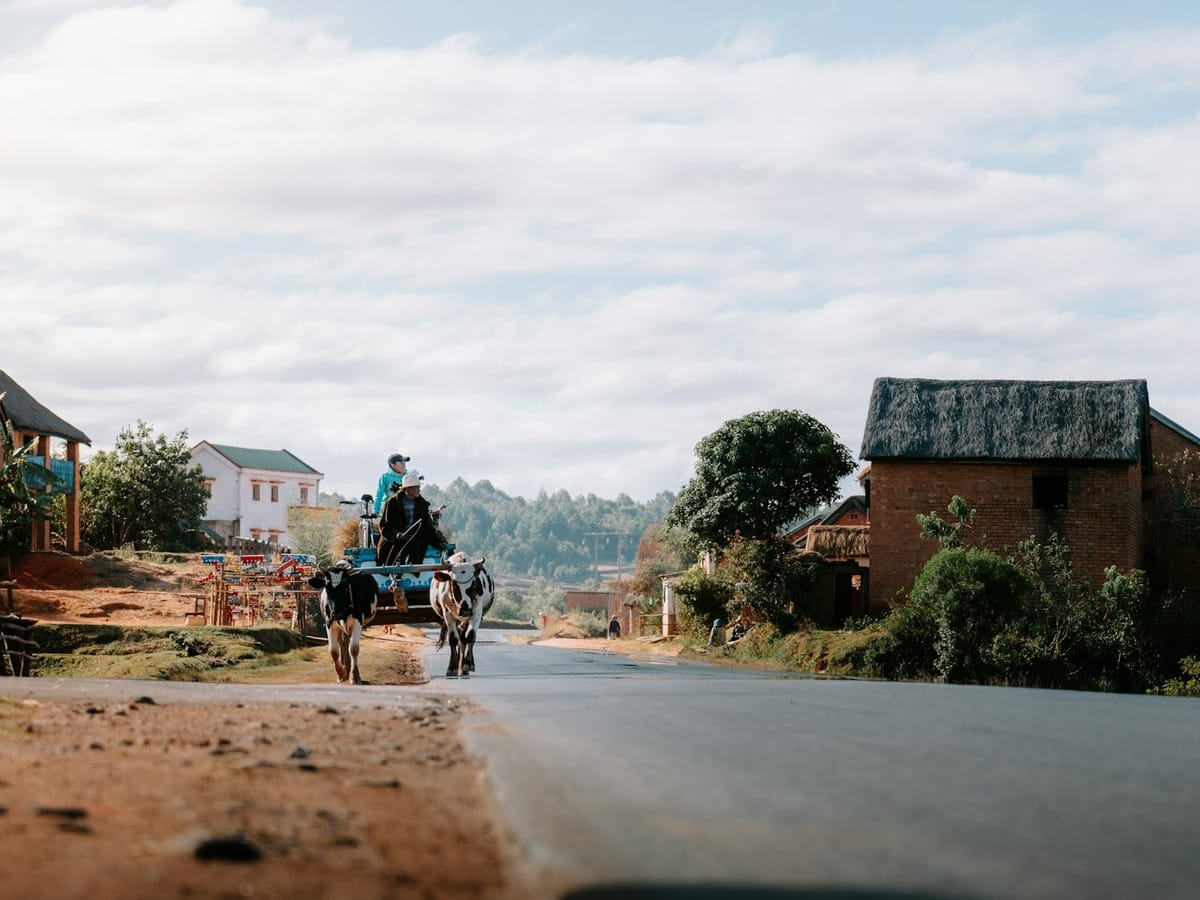
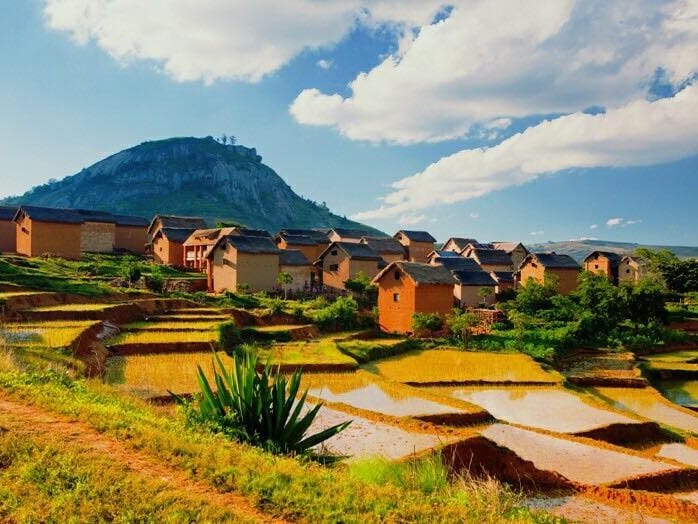
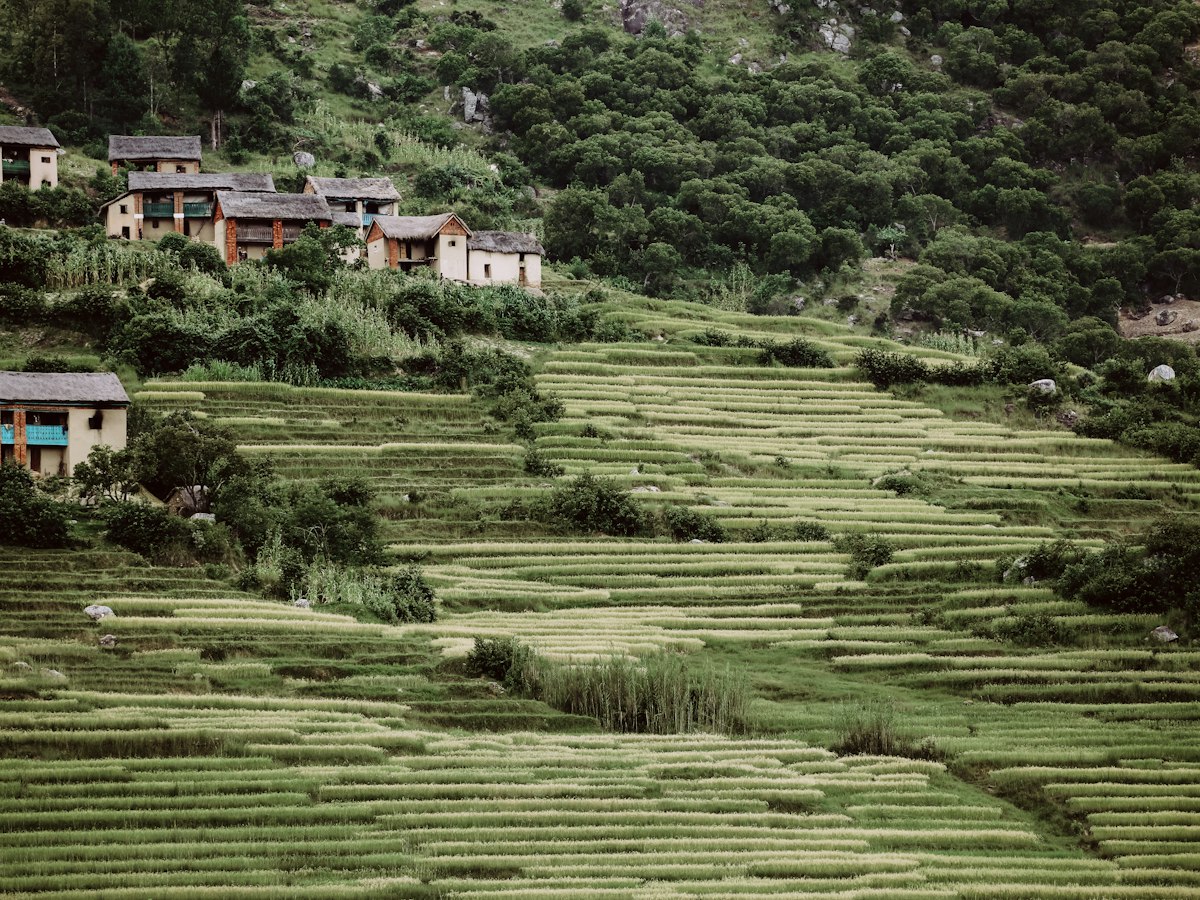
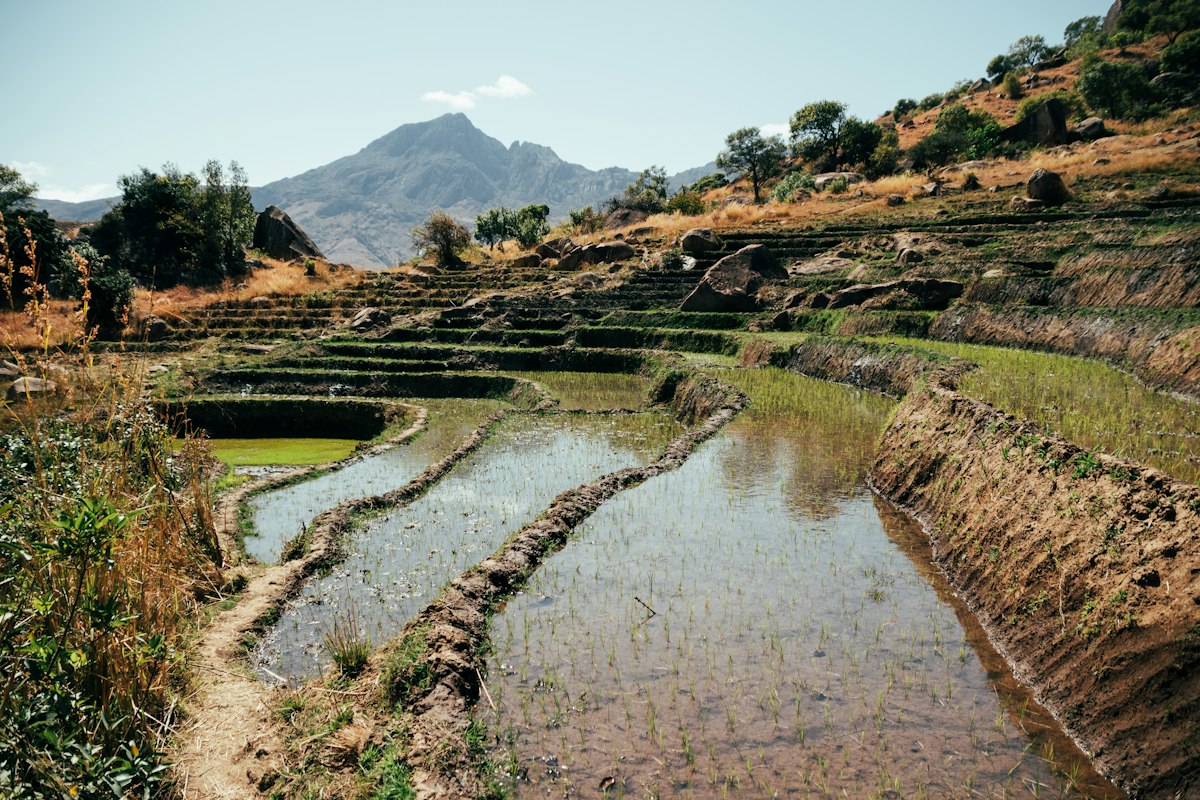
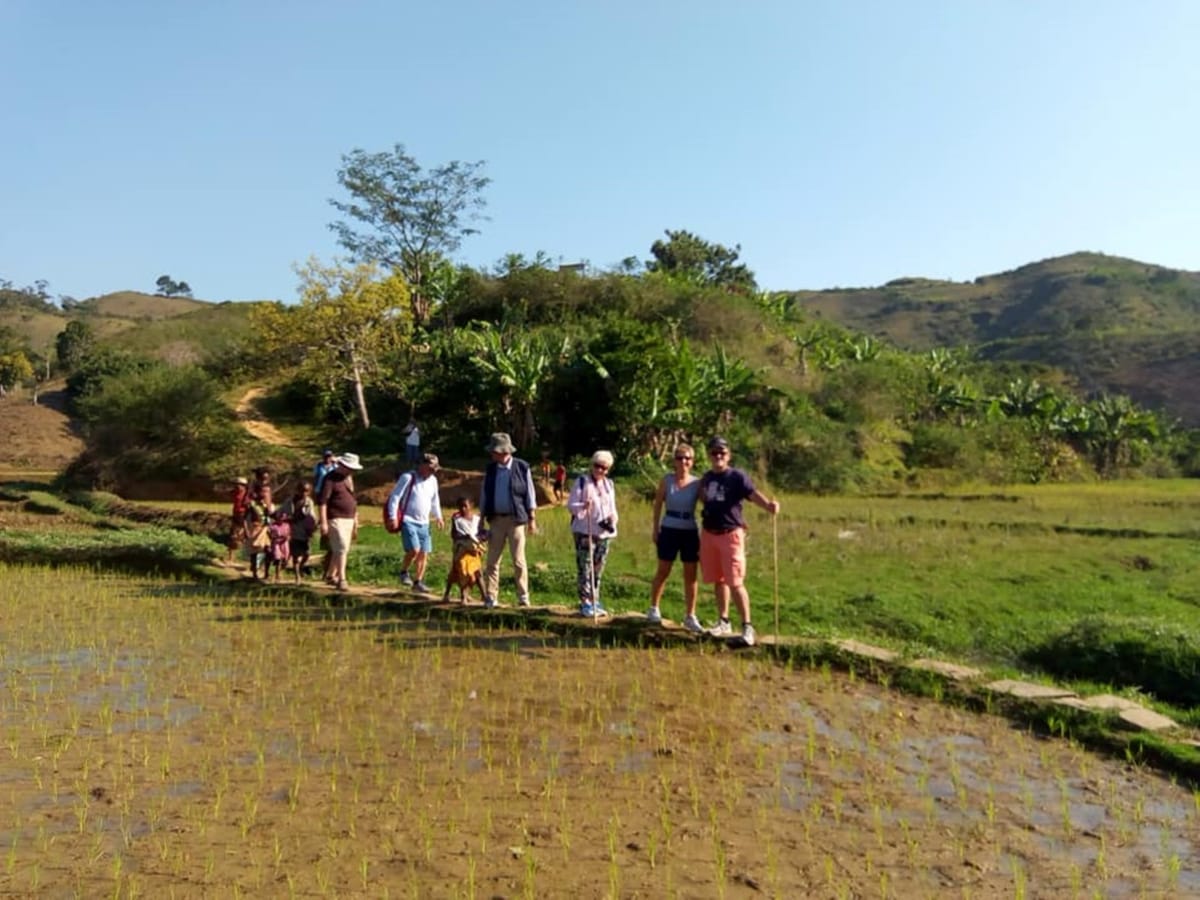
Between Ambositra and Ambalavao, the road winds through the rice terraces of Betsileo country, green or golden depending on the season and dotted with red-brick villages.
Watch the lemurs
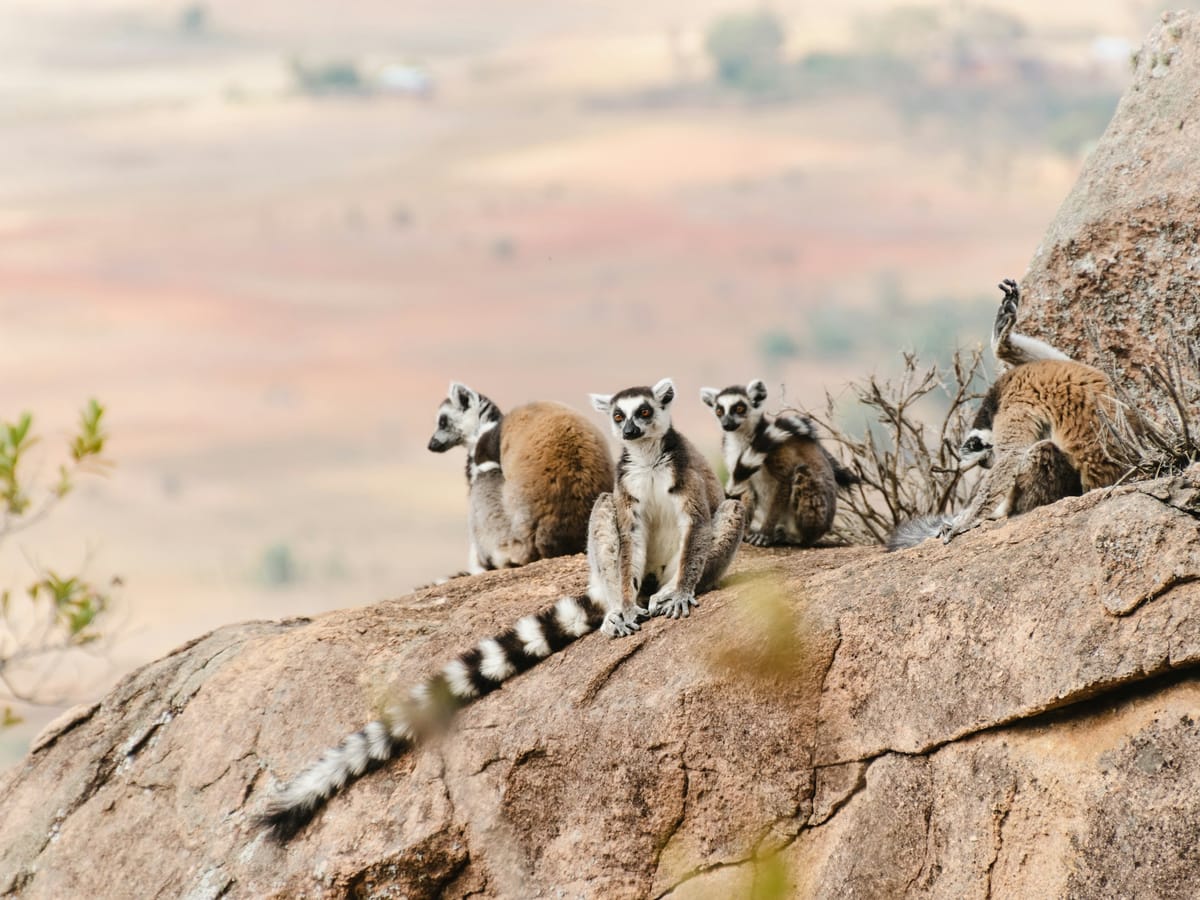
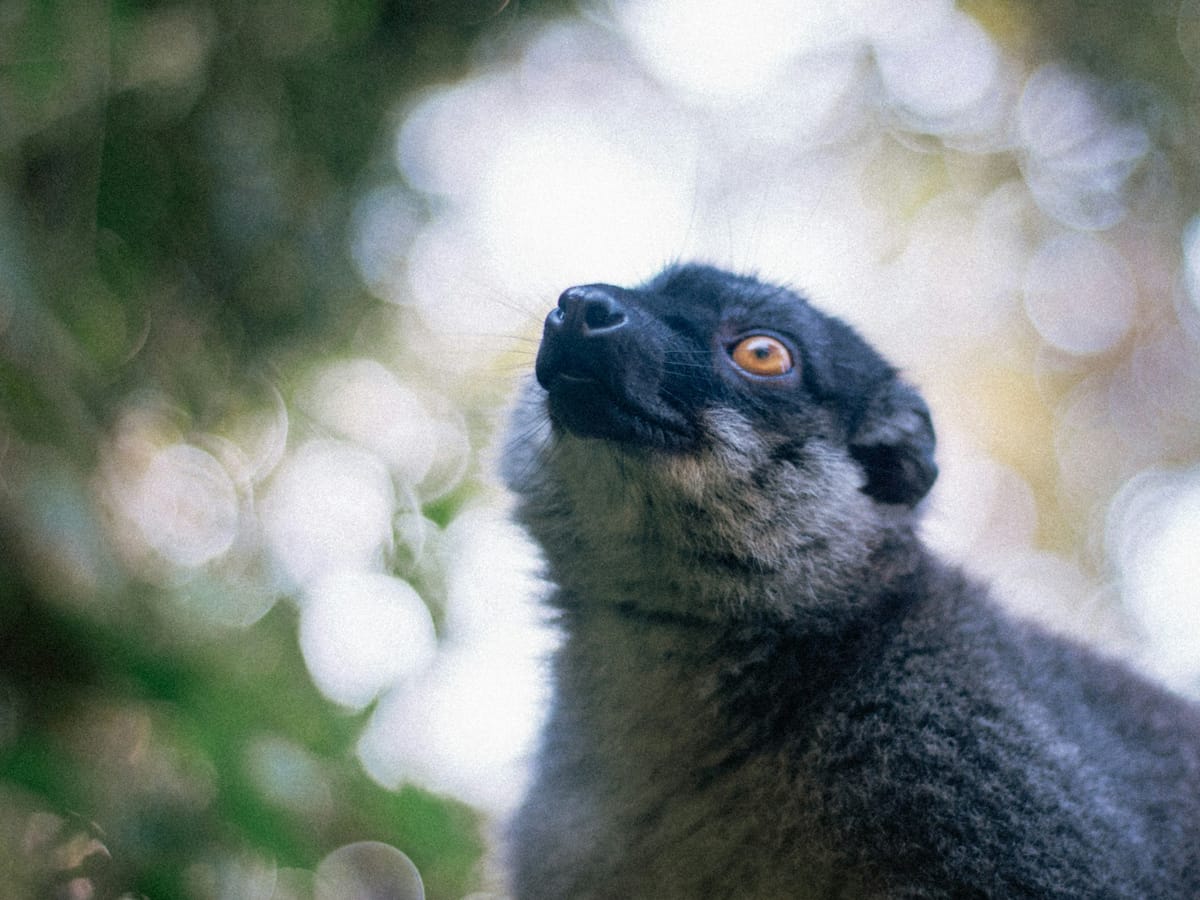
Sifakas and bamboo lemurs in the Ranomafana rainforest, ring-tailed lemurs on the granite boulders of Anja: every encounter happens on foot, always with a local guide.
Hike in Isalo
Canyons, natural pools and sandstone plateaus: a full day’s walk in Isalo National Park, followed by sunset at the Isalo Window.
End by the lagoon
At the end of the road, the beaches of Ifaty or Anakao are made for swimming, snorkelling and meeting the Vezo fishermen and their outrigger canoes.
Destinations
Where to go
Our favourite places for this activity, to link together or to slot into one of our tours.
Highlands, south of the capital
Antsirabe and Ambositra
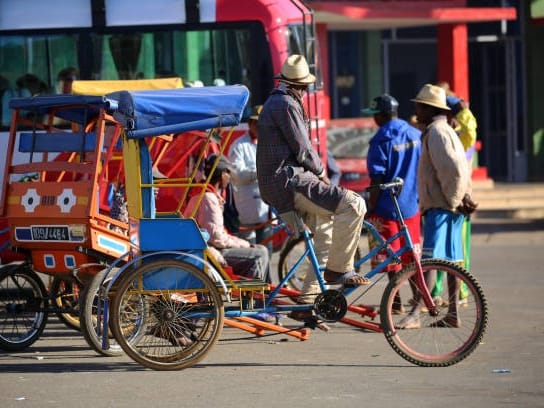
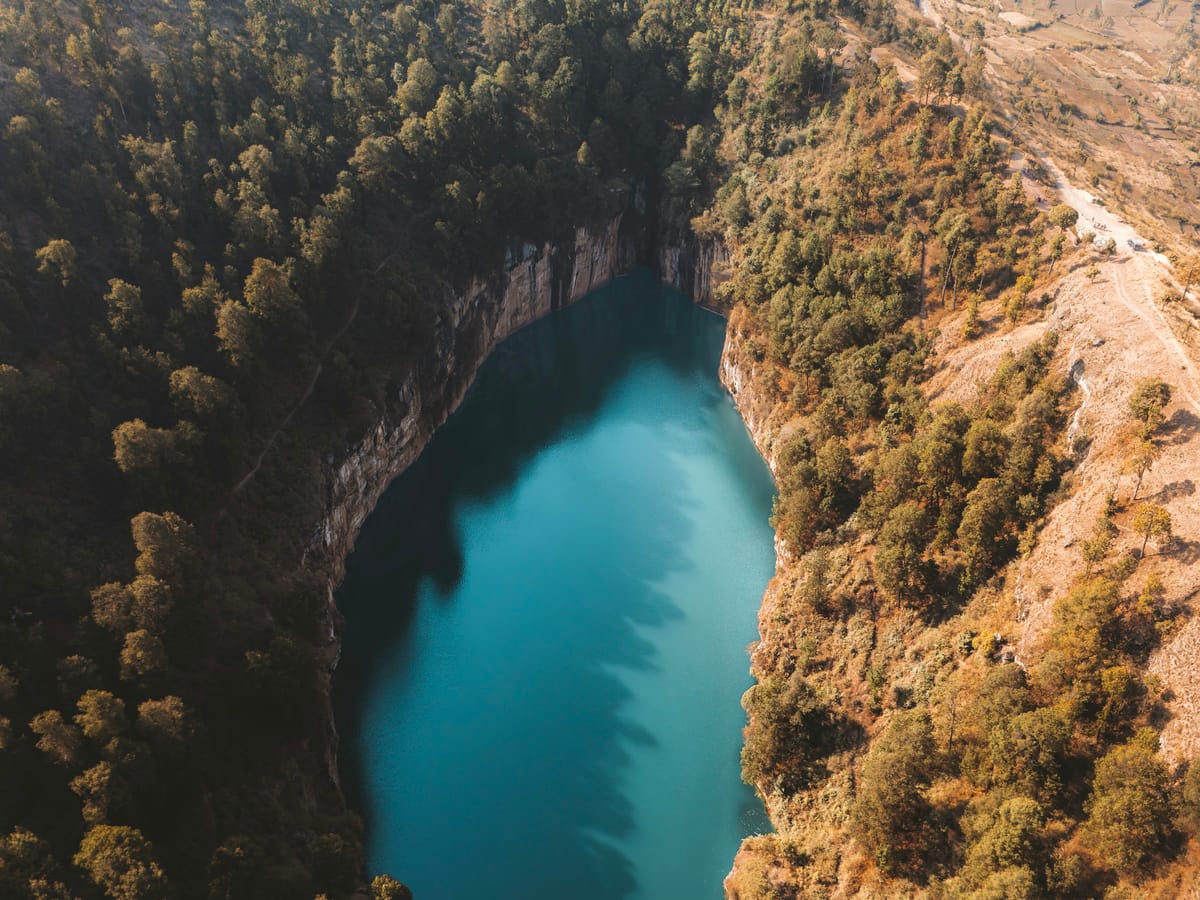
Some 170 km from Antananarivo, the spa town of Antsirabe sits at 1,500 metres and is best explored by cycle rickshaw, with the crater lakes of Andraikiba and Tritriva close by. Further south, Ambositra is the home of wood carving and marquetry, and the gateway to Zafimaniry country, whose woodcrafting knowledge is recognised by UNESCO as intangible heritage.
East of the RN7, near Fianarantsoa
Ranomafana National Park
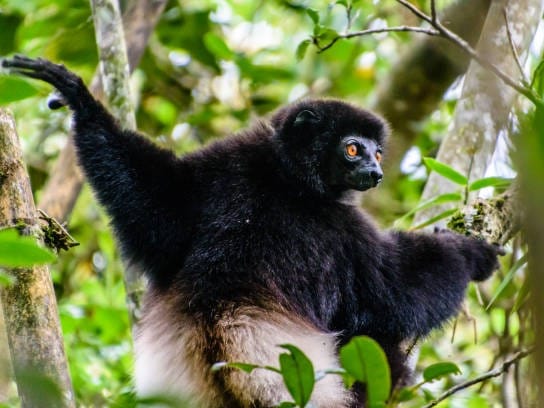
Around sixty kilometres from Fianarantsoa, this rainforest park, created in 1991, is part of the Rainforests of the Atsinanana World Heritage Site. More than a dozen lemur species live here, including the golden bamboo lemur. A daytime walk with a local guide, a night walk along the edge of the park and a dip in the village’s hot spring pool round off the stop.
Betsileo country, Haute Matsiatra
Fianarantsoa, Ambalavao and Anja
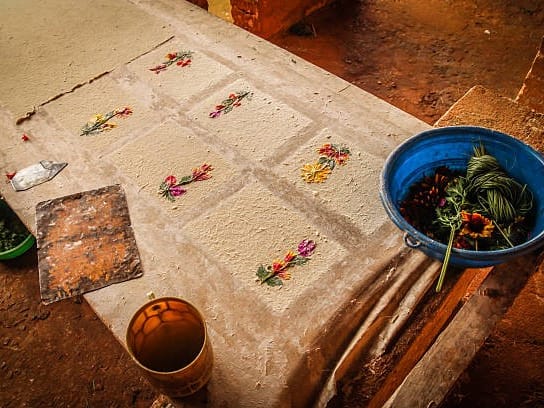
Fianarantsoa has kept its old upper town of cobbled lanes and historic churches, not far from the Sahambavy tea estate. Some 50 km further south, Ambalavao makes Antemoro paper and holds a large zebu market twice a week. Thirteen kilometres south of the town, the community-run Anja Reserve is home to many ring-tailed lemurs living among granite boulders.
South, Ihorombe region
Isalo and Ranohira
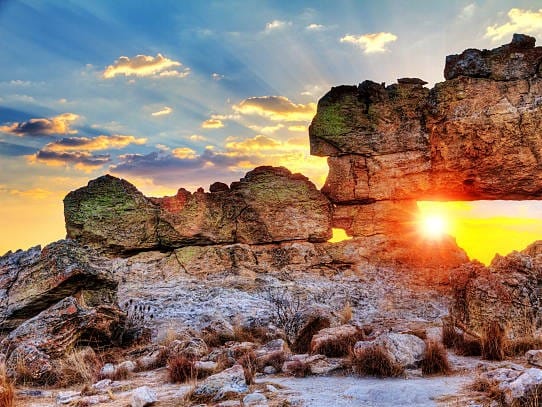
After the vast grassy plateaus of the south, the road reaches Ranohira, gateway to Isalo National Park: a sandstone massif sculpted by erosion, with canyons, natural pools and palm trees. Allow at least two nights for a full day’s hike with a local guide, compulsory inside the park, and a sunset at the Isalo Window.
South-west, Mozambique Channel
Toliara, Ifaty or Anakao
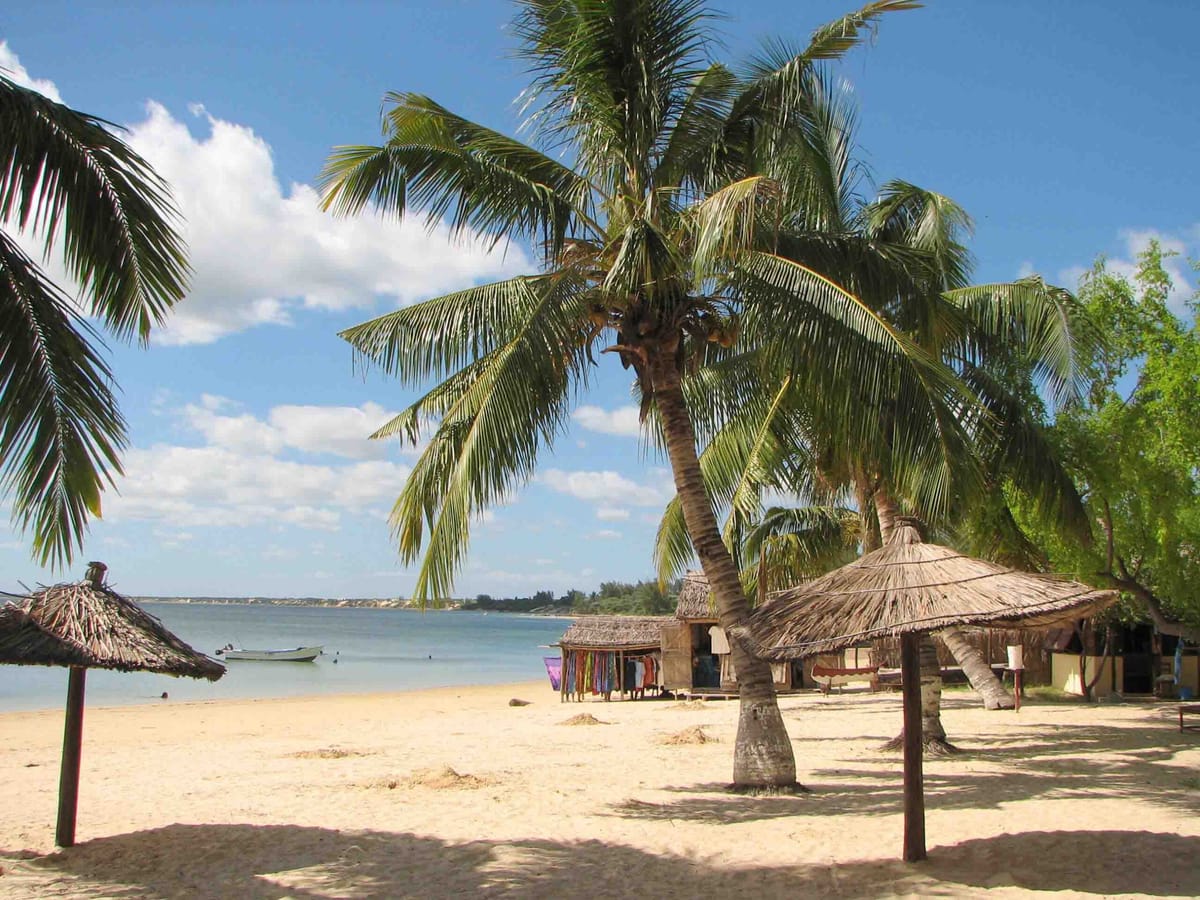
At the end of the RN7, Toliara looks out over the Mozambique Channel. Some thirty kilometres north, the beaches of Ifaty and Mangily line a lagoon sheltered by the barrier reef; to the south, the Vezo fishing village of Anakao is about an hour away by boat. A welcome place to unwind after the long road south.
In pictures
The activity in photos
A few images of the activity and of the places where you can enjoy it.
The right time
When to go
The dry season, from April to October, is the most pleasant time: roads are in better condition, skies are often clear and the light is lovely for photographs. In June, July and August, nights are cool in the Highlands, with average lows of around 7 °C in Antsirabe, while the south stays sunny. From December to March, rain and cyclones can slow the journey and make trails slippery.
- From June to August, a jumper and jacket are essential in the Highland evenings.
- Ranomafana’s forest gets rain all year round: bring a rain jacket.
- November brings the first rains, and the landscape turns green again.
Month by month
- Jan possible
- Feb possible
- Mar possible
- Apr ideal
- May ideal
- Jun ideal
- Jul ideal
- Aug ideal
- Sep ideal
- Oct ideal
- Nov possible
- Dec possible
- Ideal
- Possible
- This month
Recommended season: Best from April to October
In your bag
Gear and equipment
What is provided and what you should bring to make the most of the activity.
Provided
- Private vehicle with driver-guide
- Fuel, road taxes and parking
- Local guides in the parks on your itinerary
- Tailor-made itinerary and stops
What to bring
- Jumper and warm jacket for Highland evenings
- Light clothing and a hat for the south
- Walking shoes
- Waterproof or windproof jacket
- Sun cream and insect repellent
- Binoculars and a head torch
- Small change for markets and tips
- Personal medical kit
Peace of mind
Safety advice
A few simple rules so you can enjoy the activity with peace of mind. On site, always follow your guide’s instructions: they know the ground and the conditions of the day.
- Avoid driving after dark: roads are unlit and many vehicles have no lights, so we plan each stage to arrive before nightfall.
- Journey times vary with roadworks, traffic and weather: allow some leeway and let your driver-guide adjust the programme when needed.
- Wear your seat belt and take regular breaks, especially on the long stretches between Ranomafana, Ambalavao and Isalo.
- Drink only bottled or treated water and wash your hands often, especially before meals eaten on the road.
- See your doctor before you travel about vaccinations and malaria prevention, and bring enough of your usual medication.
- In parks and reserves, always follow the local guide, stay on the trails and never feed the lemurs.
- Take out travel insurance that covers medical care and repatriation, as well-equipped hospitals are rare outside the main towns.
With BEMIRAY
Why choose this activity?
A driver-guide all to yourself
Your driver-guide knows the RN7 and its stopping places, drives with care, shares the history of each region and opens the doors to markets, workshops and villages along the way.
A fully tailor-made itinerary
Number of nights, detours, luxury, charming or simple accommodation: we shape every stage around your pace and wishes, and reply to your request within 48 hours.
Local guides at every stop
In national parks and community reserves such as Anja, local guides take over: your visit helps protect the forest and supports the neighbouring villages.
Our tours already follow it
Our Rice Fields, Kingdoms and Rituals, Myth and Legend and Immersive Journey tours already follow the RN7: a proven route to adapt, shorten or extend as you wish.
Good to know
Your questions
Another question? Our team replies within 48 hours, in English or in French.
How many days does the RN7 take?
Allow at least eight days from Antananarivo to Toliara to enjoy the stops without rushing, and ideally two weeks to include Ranomafana, Isalo and a few nights on the beach. Our tours that follow this road last 12 to 19 days, as they also explore other regions.
How many hours a day will we drive?
Depending on the stretch, three to six hours behind the wheel, not counting stops: about four hours between Antananarivo and Antsirabe, often more between Antsirabe and Ranomafana. We alternate long driving days with days spent exploring.
Is this trip suitable for children?
Yes, as long as the driving days are well balanced: shorter stages, regular breaks and child-friendly activities such as the ring-tailed lemurs of Anja or swimming at Ifaty. Let us know the children’s ages so we can arrange a suitable vehicle and equipment.
Do we have to drive back to Antananarivo?
Not necessarily: our Myth and Legend and Rice Fields, Kingdoms and Rituals tours fly back from Toliara on a domestic flight, which is not included in their price. Our Immersive Journey, by contrast, heads back up the RN7: the road lets you see the Highlands again, add stops or avoid flying.
Can the RN7 be combined with other regions?
Yes: Andasibe’s rainforest or Lake Itasy before heading south, the beaches of Salary north of Toliara, or the Tsingy de Bemaraha by way of the west coast. Our Rice Fields, Kingdoms and Rituals and Immersive Journey tours already combine the RN7 with other regions.
Is tipping customary?
It is never compulsory, but your driver-guide and the local park guides always appreciate it when you have enjoyed their service. We are happy to explain local customs before you set off.
Combine it
Our tours with this activity
Find this activity on these itineraries, or add it to the tour of your choice: every trip is tailored to your wishes.
West, South & Highlands
Quote within 48 h
19 days
Something else in mind?
More activities
Isalo, Makay, Andringitra
Canyons, natural pools and wild massifs, from a half-day walk to several days deep in the wilderness.
Best from April to October
Andasibe, Ranomafana, Ankarafantsika
Early in the morning or after dark, with a local guide, to meet indris, sifakas and ring-tailed lemurs.
Year-round, best April–May and August–November